


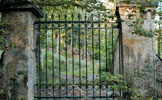
More and more people want to reside in secure, gated residential communities.
Challenges
The key challenges faced by the administrators of a private residential complex include:
A hassle-free system. While the residents want and demand a secure environment, they are reluctant to accept a system that is difficult to use. They need a system that is very user-friendly, without compromising security standards.
Broad variety of users. The system has to handle all the users of the system, including the residents, visitors, employees, emergency service providers, garden services, delivery personnel, etc.
Tight budgets. While the expectations of the residents are quite high, the budgets are not always available to provide the services. The requirements to get approvals from the association memberships can be difficult and political.
Active participation. For a secure environment, all the participants need to play their respective roles. This is not always possible. Residents who are not owners often have a conflicting agenda to those who are owners. The sensitivity to watch for intruders is not equally prevalent. Education is the key to this goal.
Security key points
Typically, a private residential complex or estate has a full-time doorman or front desk clerk who also acts as the security checkpoint. In addition to this checkpoint, there may also be many other entrance and exit points - both pedestrian and vehicular - that need to be monitored and controlled.
Gates in conjunction with telephone entry systems are often seen as a cheaper alternative to hiring and managing security guards.
The effectiveness of gates and fencing depends on the nature of the property and also the management controls in place.
Formidable fencing and gates, by design, restrict access and therefore provide both a physical as well as a psychological barrier for criminals.
Good signage is very important to announce that the property is private property and to post no trespassing policies.
Intruders can tailgate into a property behind someone else, but this requires effort and exposes the trespasser to a potential witness. Wrong-doers want to gain access to a property anonymously and blend into the community.
Intruders like quick escape routes and do not want to be trapped behind fences or gates. Should they be discovered, many will bypass a gated community for one that is not gated.
The choice of gate depends on the purpose and the property type. With any type of gate system, in-ground loop detectors are required to automatically signal when a vehicle is present so that the automatic gate can open on exit.
Access requirements
In order to design an efficient and cost-effective access security system it is necessary to address the needs of each of the users, namely residents, visitors, employees and service providers.
Residents
Access can be provided to residents by use of any of the electronic card/tag access technologies. Electronic card access technology in conjunction with telephone systems has proved a successful way to provide access for both visitors and residents.
Visitors
One of the primary methods to provide access for visitors at a gate or main entrance to a building, is telephone entry.
Where a security guard or doorman is not available, the telephone entry system provides the means for a resident to control access remotely. Telephone entry systems provide an extra measure of security at minimal expense.
Employees
In a typical residential complex, employees are treated similarly to the residents in that they use the same technology of cards, tags, clickers etc.
However, most systems allow programming these cards to be valid only during the shift that the employee is supposed to be working. It is also possible to regulate the entry and exit of temporary employees with the software used by the manned guard for visitor processing. In such cases, the data on the temporary employee is stored in the memory, with a photo if required, and the guard checks to make sure the correct person is granted entry. A record is kept of every such entrance and exit by the system.
Service providers
Each group of service providers needs to be accommodated in the complex, for example emergency personnel (fire, ambulance etc) need to be provided with proper tags, codes or other devices to make sure they can get quick access in times of emergencies. For vehicular entrances it is possible to provide a siren monitoring device so the gate will open automatically when the ambulance or the fire engine with the particular siren sound approaches the gate.
From the Private Residential Complexes Handbook - How to Design Automated Access Control & Parking Systems for Private Residential Complexes. www.amtel-security.com






© Technews Publishing (Pty) Ltd. | All Rights Reserved.
 printer friendly version