


At the recent ID4Africa 2025 Summitin Addis Ababa, the spotlight was firmly on building secure, inclusive, and scalable digital identity ecosystems for the African continent. While government and multilateral institutions explored frameworks and infrastructure, the private sector brought a critical perspective; innovation happens where real-world problems meet agile, market-responsive solutions.
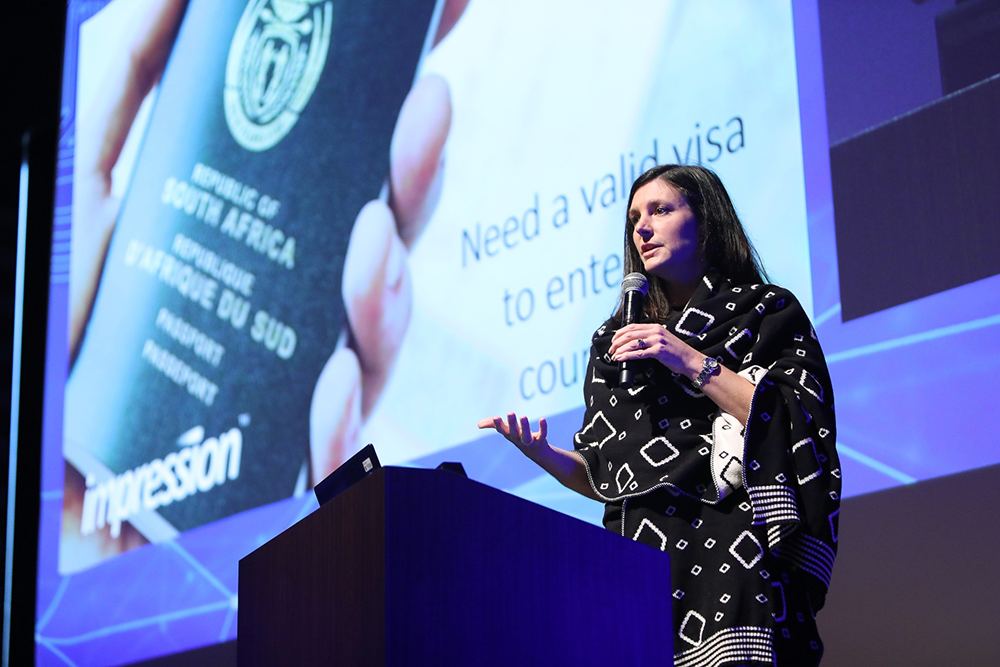
Carrie Peter, MD of Impression Signatures and Advocacy Committee vice-chair at the Cloud Signature Consortium, was invited by the World Bank to participate as both presenter and panellist in a high-level, closed workshop focused on Public Key Infrastructure (PKI) and eSigning. The session brought together stakeholders from over 150 countries, including 50 African nations, to explore the practical deployment of digital trust technologies across the continent.
As one of Africa’s only wholly African Certificate Authorities, operating in eight countries, Impression Signatures showcased how purpose-built innovations empower users to deliver secure services, even in low-connectivity environments. These tools are not only inclusive, but also deeply practical in a region where smartphones and consistent internet access are not guaranteed.
“Our mandate was clear,” said Peter. “Showcase how PKI is already driving value on the ground, highlight its role within the wider digital public infrastructure, and illustrate how the private sector can bridge the gaps governments often lack the resources or mandate to close.”
Indeed, governments across Africa are still in the early phases of digital identity deployment. They face constrained technical capacity, limited political directives, and a shortage of implementation expertise. This is where the private sector plays a pivotal role, not just by building technology, but by educating, capacitating, and creating demand for these innovations through real-world use cases. In many ways, African nations are uniquely positioned to leapfrog more technologically advanced countries, as they are not burdened by legacy infrastructure and do not need to reinvent the wheel. This provides them with a rare opportunity to move forward rapidly with more agile, future-ready solutions.
PKI frameworks and solutions
The World Bank Workshop itself was intentionally closed, designed to create a trusted space where public sector delegates could engage openly with expert practitioners. Impression’s role centred on capacity building, sharing proven PKI implementation frameworks and offering practical, supportive guidance on integrating these into national systems. The message was clear; this is an ecosystem, not just a technology, and collaborative education is the key to successful, sustainable adoption.
PKI underpins the integrity of every secure digital ID initiative. It enables legally recognised digital signatures, authentication, encryption, and document attestation. Its value lies not just in security, but in scalability and trust. At the event, Peter highlighted how digital trust anchors, such as PKI, are already in use to protect healthcare records, financial services, government permits, and eCommerce transactions, bringing measurable efficiency and fraud reduction.
“The closer we can align PKI with real-world, high-impact use cases, the more traction we get, and the more we educate governments on how to help build these ecosystems, the more resilient and inclusive their systems become,” she added.
This alignment was echoed in conversations across the ID4Africa Summit. From biometric authentication to decentralised identity wallets, stakeholders stressed the need for interoperability and simplicity. The Solutions Forum on Day 2 illustrated this in action, with live demonstrations of systems that link identity credentials across government, health, and financial services.
Public-private partnerships were another recurring theme. From Visa to TECH5 to emerging local innovators, the resounding consensus was that collaboration is essential for building scalable, sovereign digital identity infrastructure. In this landscape, key technology providers should act as trusted enablers, working hand-in-hand with government to build foundational systems that serve all Africans.
As the continent accelerates toward full-scale digital transformation, the lessons from ID4Africa 2025 are catalytic. Secure identity systems must be designed with empathy, deployed with agility, and governed with integrity. The private sector holds the key to unlocking this potential through innovation, capacity building, and relentless focus on the end user.
For more information, go to www.impression-signatures.com






© Technews Publishing (Pty) Ltd. | All Rights Reserved.
 printer friendly version