


From the beginning of CCTV implementation, the ability of the technology to identify the face of the person involved in an incident has been one of the fundamental reasons for having cameras and recording systems. The fact that one can identify the face of a person who has been on the scene has always been seen as an essential part of evidence generation that helps catch and convict criminals. It has also been seen to be a primary deterrent.
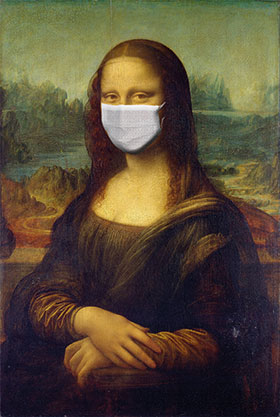
The same thinking still largely holds for CCTV users today. The importance of identification of faces has also been reflected in the extensive investment and development of facial recognition technologies that we see in the industry. However, the need for COVID-19 protection and PPE (personal protective equipment) has changed the whole game plan. The wearing of face masks has become ‘advised’ at least, and mandatory in many places. Rather than looking for people who are hiding their faces as potential suspects, we are now, ironically, prosecuting people not wearing masks.
In my training on CCTV surveillance skills and body language, I’m increasingly coming across a number of examples which show that criminals are wearing masks to take advantage of the fact that they can’t be identified when committing offences. Possibly the biggest exception to this rule is that if those who assaulted the US capitol had been more conscious of wearing their PPE face masks, there probably would have been a lot less people having the FBI knocking on their doors.
There has also been some notable recognition of criminals wearing face masks and headgear by super recognisers before and since the COVID-19 pandemic in London and other places in the UK. Nevertheless, in the main, we have to accept that criminals using face masks nullify one of the most advantageous benefits of CCTV. If you can’t identify who was there and how they were involved, what can you do to have a constructive contribution from your CCTV?
Crime behaviour and people profiling
My focus on surveillance has always had an emphasis on crime behaviour and people profiling as part of criminal detection. Recognising a known suspect from their face is useful, but for the vast majority of cases, it is recognition of the body language and other features of a person which shows a potential incident is occurring or is in progress.
Capturing faces is therefore just one part of a crime recognition and evidence gathering process, albeit an important one in the presentation of evidence. There remains a whole range of ways in which people can be identified, which should be part of the daily skills implemented by surveillance operators.
The importance of clothing is often neglected. The way that criminals have used headgear, hoodies, collars and other aspects of clothing has always been something to look at more carefully. Now, the way they are used together with mask wearing means they still have the same, and possibly even more, significance in indicating that people are avoiding any kind of recognition. The brands, logos, colours, styles and accessories are also features that can have meaning, with gang membership often having particular brands as identifying marks.
Interestingly, talking to operators from Katlehong the other day about a particular criminal group that was robbing shops in malls, showed almost the identical preferences in the brand and colour of shoes they were wearing as an Eastern European gang I was discussing with a delegate on a course in London at the beginning of 2020. Operators need to find out local knowledge of what clothing trends there are among criminal groupings.
Besides the fact that we can use the wearing of clothing as a form of body language by criminals, known clothing of a suspect is likely to reappear when the suspect commits another offence. In fact, some years ago Mick Neville set up a unit at New Scotland Yard called VIIDO, specifically to profile clothing and logos as a way of identifying suspects. By checking out cases and what suspects were wearing, for example, they found that what appeared to be a major outbreak of thefts on London buses happened to be by just one person who was wearing the same jacket in all of them.
Creatures of habit
Criminals, like anybody else, are creatures of habit and have their favourite clothing for certain occasions, just like the businessman who wears their favourite suit to work on a regular basis, especially when under pressure to deliver on some meeting or contract.
Finally, clothing gives us specific clues about people. Clothing has distinctive markings, tears, stains, and fit issues. These can be used to identify people across different situations, and even their removal can lead to identification. On one of the gold mines where I was doing some training, a suspect who thought they may be under surveillance disappeared, and when they reappeared later the sticker that had been prominent on their safety helmet and could be used to identify him had been removed. Unfortunately for him, he hadn’t realised the sticker had left a clean mark in exactly the same shape and position as the one people were looking for, which stood out against the dirt and scuff marks of the rest of the helmet which had endured a long time of work exposure.
The clothing brands as well as what else you wear can also give direct identifiers that can be linked to other information, including access control systems within companies. For public areas though, the Capitol assault was another good example of what not to wear if you are worried about being tracked. The man “dressed in horns, a bearskin headdress, red, white and blue face paint, shirtless, and tan pants,” according to the US Justice Department, was distinctive enough, without the additional information about carrying a spear, approximately 2 metres in length, with an American flag tied just below the blade. A range of more subtle but still definite identifications were made of people from the Capitol assault, including one person carrying their company identification badge around their neck, T-shirts with associations, and people holding banners that facilitated identification.
Other identification characteristics
There are also a range of physical characteristics that can be used as identifiers, with tattoos being one of the most distinctive, but hairstyles, scars, piercings, and distinctive teeth such as a gold tooth or gaps in teeth feature in helping identification. Physical attributes such as size, body profile and shape, facial hair, and distinctive features which could include facial attributes (hair lines, eyebrows, nose shape, mouth shape, ear positioning and size and shape, indicators of leg injuries, among others, being things that can be looked at.
More recently, innovations such as walk or stride analysis, common mannerisms, distinctive nervous signs, and typical posture can all feature in helping to identify people. Bear in mind that one can only use things like mannerisms or stride if you have benchmark behaviour of the person you can compare against.
The area that the person is in can also facilitate identification, both there as well as in more extended settings. For some environments, access control records can be used to identify who is in the area, including some which employ biometric clearance. For other environments, moving into zones further away from the event may well provide a chance that a camera further out captured a picture of the person.
In one case of a Capitol protester, he had been making a disturbance on the plane in another city when boarding to go to Washington, had been escorted off the plane, and a security officer recognised him from video showing the Capitol protests and retrieved his name off the system. Using automated number plate recognition when a suspect has been associated with a vehicle can give direct clues as to a person’s identity if vehicle information is on file or through police assistance.
With social media involvement, information from the person’s contacts may well be forthcoming when people recognise suspects on video. Looking at the people around the suspect and who he or she interacts with can further increase the chance of picking up identifiers and extending the opportunities for recognition.
The truth is that with much of the early CCTV footage, and even footage from a few years ago, the quality of video and camera angles made facial identification difficult unless under the best conditions. With the development of camera quality and resolution in recent years, as well as greatly enhanced recording capacity which has done away with the need to compress video beyond acceptable levels, recognising and identifying faces has become a lot easier. Even so, the use of additional profiling information on people to facilitate positive identification still plays a role which becomes especially important in a COVID-19 mask-driven environment. Operators have to be trained and managed to use these kinds of information though, and the importance of generating intelligence information to assist surveillance can also make the approach way more effective.
About Dr Craig Donald

Dr Craig Donald is a human factors specialist in security and CCTV. He is a director of Leaderware which provides instruments for the selection of CCTV operators, X-ray screeners and other security personnel in major operations around the world. He also runs CCTV Surveillance Skills and Body Language, and Advanced Surveillance Body Language courses for CCTV operators, supervisors and managers internationally, and consults on CCTV management. He can be contacted on
| Tel: | +27 11 787 7811 |
| Email: | [email protected] |
| www: | www.leaderware.com |
| Articles: | More information and articles about Leaderware |






© Technews Publishing (Pty) Ltd. | All Rights Reserved.
 printer friendly version