


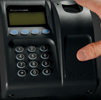
Ensuring the safety of commercial environments is an escalating global challenge. Managers are fast recognising that biometric technology is the latest weapon at their disposal in the fight to ensure a more secure work environment.
Corporates all over the world are faced
with the ever-increasing threat of fraud,
corruption and industrial espionage. White-collared criminals are using more advanced methods to gain unauthorised access to business premises, networks, sensitive data and client information. As a result, companies have to be more effective in securing their premises and intellectual property and are having to fight back with improved and innovative advances in security systems and technologies.
Successfully securing a commercial environment involves a critical combination of effective control over both physical and logical access. Conventional security technologies are being updated as they are not proving effective enough against new methods of gaining fraudulent access. Most security systems verify the identity of an individual by using their possessions, such as a smart card or their knowledge, for example a password. The features required for identification in a security system need to be universal, unique to an individual, permanent and measurable.
Biometrics has become a buzzword and is on the lips of practically everyone in the security industry. Biometrics meets all the features required for identification and more importantly, for leading the way to safer security. Unlike elements of conventional security systems, biometrics cannot be lost, stolen, forgotten or shared, which makes it more secure than cards, tags and pins. It also eliminates the need for keys and password maintenance is no longer required.
Today, the most commonly used form of biometrics is fingerprint readings, as it is the most cost-effective, easy-to-use form of access control. It is also considered to be extremely accurate and secure. The applications for fingerprint biometrics are vast and can be used to secure anything from boom-gates to doors, turnstiles and even IT networks and computers.
The first line of protection for commercial environments is physical access control onto the company's premises through gates, booms and turnstiles. Secure physical access control involves the identification of employees and visitors entering and exiting the building, through secure areas and checkpoints or portals.
With fingerprint biometrics one can be assured that the people entering the premises and buildings are authorised to do so. In addition to being more secure and accurate than conventional methods, fingerprint biometrics is also faster in identifying an individual and therefore lends itself to quicker throughput times, improving return on investment as functionality and efficiency are increased.
Another bonus is that some biometric fingerprint readers are fully integrateable with existing physical access control and time and attendance systems. For those companies that are looking at upgrading to fingerprint readers on their security systems, they can rest assured that they will not have to pay the extra cost for replacing the entire system.
The latest advances in biometric software programs also boast fake finger detection. This kind of application is used in areas which contain very sensitive data and information, or very expensive equipment which need the highest levels of security.
The second line of protection and defence in commercial environments is that of IT protection. This includes the protection of sensitive information on internal networks, databases and computers. These networks and computers are normally password protected. Passwords, however, are usually forgotten, copied and need to be constantly changed and updated in order to maintain a reasonably high level of security.
It is becoming increasingly common to safeguard sensitive information by integrating fingerprint readers into IT systems. Not only does it eliminate the costs of administering password protections, but the integrity of the system is also secured. It is now possible to effectively prevent unauthorised access to a computer network by securing access with an individual's unique fingerprint.
The application of biometric technology is lending itself to a more secure physical and logical environment, where the safety of a company's premises and internal network can be assured and fraud can be combated and avoided through the use of fingerprint authentication. Biometrics, and more specifically fingerprint biometrics, is increasingly gaining momentum as the preferred choice for assuring a more secure commercial environment in the future.






© Technews Publishing (Pty) Ltd. | All Rights Reserved.
 printer friendly version