


As warehouses become increasingly automated and customer expectations accelerate, reliability has become one of the most valuable assets in modern supply chains. For distribution centres processing thousands of parcels every hour, even relatively short periods of unplanned downtime can have significant operational and financial consequences.
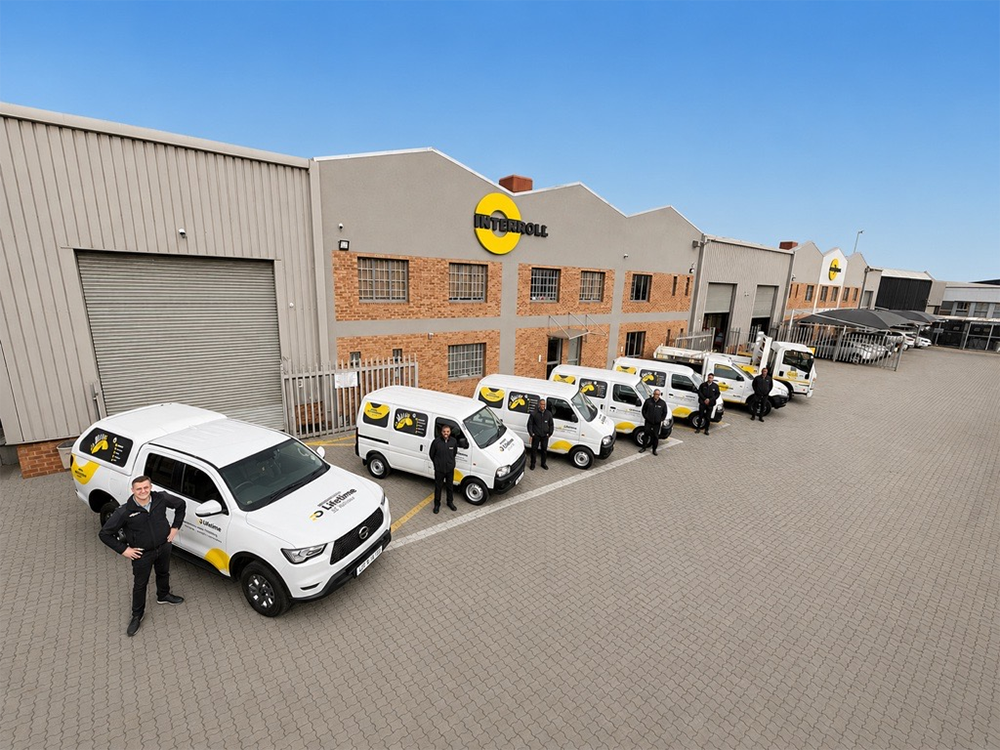
This has fundamentally changed how organisations approach maintenance. Rather than waiting for equipment to fail, successful businesses are investing in proactive service partnerships designed to maximise uptime, improve operational resilience and extend equipment life.
Maintenance as a strategic investment
Maintenance is no longer viewed as a necessary, but grudged operational expense. Instead, it has become a strategic business function directly linked to customer service and operational performance. “One hour of downtime can cost significantly more than a week of planned maintenance,” says Gavin Hall, managing director of Interroll South Africa.
As same-day delivery and increasingly demanding customer expectations become the norm, warehouse operators can no longer afford unexpected interruptions. “Our customers want as little unplanned downtime as possible,” explains Hall. “Reliability has become absolutely critical.”
Moving beyond reactive maintenance
Traditionally, maintenance often meant responding after something had already failed. Today, connected equipment and operational data allow organisations to take a far more proactive approach.
Rather than servicing equipment according to generic schedules, maintenance can be planned around actual operating conditions. “We can now determine maintenance schedules based on parcel volumes, operating hours and system utilisation,” says Hall.
“That allows us to be much more accurate about what needs attention and when.” This predictive approach reduces unnecessary servicing, while ensuring critical equipment receives attention before failures occur.
Why service partnerships matter
As warehouse operations become more complex, many organisations are recognising the value of long-term service partnerships. Service-level agreements (SLAs) are becoming increasingly common because they provide structured maintenance programmes, defined response times and ongoing technical support.
“Customers are beginning to see the value,” notes Hall. “It is no longer about selling maintenance hours. It is about protecting their equipment and operations.” Interroll’s Lifetime Service programme reflects this philosophy by supporting customers throughout the entire operational life of their equipment with preventative maintenance, audits, training, retrofit programmes, technical support, and customised SLAs. SLA customers benefit from Interroll’s proprietary AI maintenance tool that assists in designing a bespoke maintenance programme and schedule for each piece of Interroll equipment.
Responding when every minute counts
The value of proactive service partnerships with Interroll became particularly evident during a major Easter trading period when one of South Africa’s leading retailers experienced a significant failure within its warehouse conveyor system.
Although the incident disrupted operations, an established SLA ensured that technicians responded rapidly, while specialist expertise and spare parts were mobilised across multiple locations. “Problems are going to happen,” says Hall. “The important thing is having a process that everyone understands when problems arise.”
Rather than reacting in panic, both teams followed an agreed response framework that prioritised communication, technical assessment, contingency planning and system recovery. While the technical repair remained fairly complex, the structured response minimised uncertainty and helped restore operations as quickly as possible.
Reliability creates resilience
As automation and digital technologies continue transforming warehouse operations, reliability will become an even greater competitive differentiator. Businesses that combine predictive maintenance, structured service partnerships and lifecycle support will be better equipped to meet rising customer expectations, while protecting long-term investments.
Ultimately, warehouse reliability is not achieved through equipment alone. It is built through planning, partnership and a proactive commitment to keeping operations running smoothly long before problems arise. Hall concludes, “Maintenance is not simply about fixing equipment. It is about making sure our customers can continue serving theirs.”






© Technews Publishing (Pty) Ltd. | All Rights Reserved.
 printer friendly version