


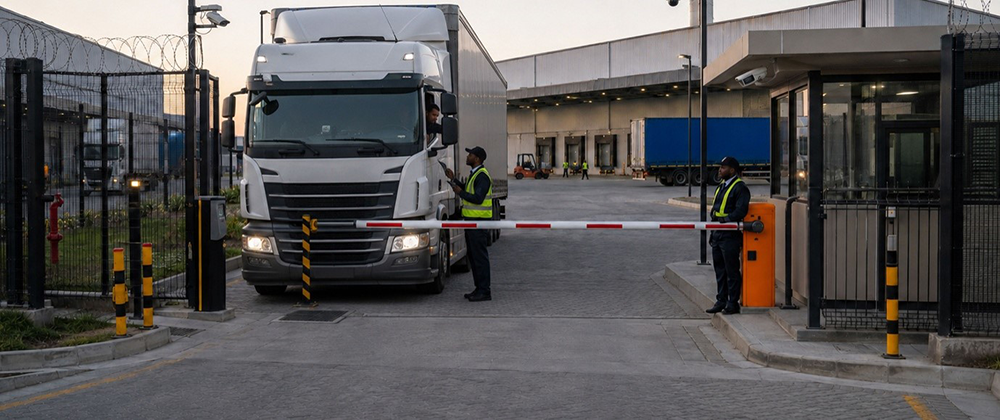
A truck arrives at a busy site early in the morning. The driver looks familiar, the vehicle registration appears correct, and there is a delivery note on the dashboard. The security officer lifts the boom, and the truck enters the site. No data is captured, scanned or validated; access is granted simply because everything looks legitimate.
A few hours later, someone discovers that the wrong container was collected. The immediate question is usually: How did this happen?
But perhaps the more important question is: What information was used to authorise the vehicle in the first place?
Was the driver’s identity verified? Did the vehicle, trailer and container match the expected collection? Was there a valid reference? Was anyone alerted when something did not match?
A boom gate can do one thing very well: move up and down. On its own, however, it cannot tell you whether the movement taking place is legitimate, authorised and properly validated. That decision depends on the information, validation and processes behind it.
Seeing the risk between the systems
Industrial sites already use multiple layers of physical protection. Electronic gates control access, safes and secure cages protect valuable goods, containers protect freight, tracking systems monitor vehicles, and security teams oversee activity. Yet losses and operational failures often occur in the spaces between these controls.
A driver’s details may be written in a visitor book. The container number may appear on a separate delivery document. Loading confirmation may be stored in a spreadsheet, while the inspection photographs are sitting on someone’s phone. Each record may exist, but no one has the complete picture.
This lack of visibility remains a wider manufacturing challenge. Zebra Technologies’ 2024 Manufacturing Vision Study, based on responses from 1200 manufacturing leaders, found that only 16% had real-time work-in-progress visibility across their entire manufacturing process.
That is significant because a business cannot effectively manage, validate or protect what it cannot clearly see and track. So, how can sites close the gaps between these systems?
Transforming the gate into a decision engine
The gate or boom gate is often viewed as the boundary between a secure site and the outside world. But a raised boom should mean more than, “Someone said this vehicle can enter”. What we need is to connect the asset, the person responsible for it, the vehicle or container transporting it, and the process authorising its movement.
Before access is granted, the process should establish:
• Who is requesting access and whether that person is expected and authorised.
• Whether the driver, vehicle, trailer and container information matches.
• Whether the movement is linked to a valid delivery, collection or loading reference.
• Whether the required documents, inductions and approvals are valid.
When these checks are completed manually or across different systems, small discrepancies can easily be overlooked. There is also a familiar operational temptation: to keep traffic moving, the gate is opened, and the prescribed safety and validation steps are skipped. What saves a few minutes at entry can create far greater risk later.
Digital access management enables linking relevant person, vehicle, and transaction information before the movement is approved. Where an electronic boom is integrated with the access process, validated information can support a more consistent decision.
If something does not match, a well-designed process should prevent access or an unapproved manual override until the appropriate decision-maker has reviewed the exception and authorised the next step. The exception should also be recorded so that it can be investigated by security or another authorised staff member.
Technology should not replace human judgement. It should enforce agreed-upon processes, reduce the risk of a routine shortcut becoming a serious asset incident, and provide decision-makers with verified information at the moment it matters.
Securing the operational process behind the container
Safes, secure cages, storerooms and freight containers provide an essential physical layer of protection. However, the strength of the container does not automatically guarantee the integrity of the process around it. Even a strong physical barrier can be undermined by a weak or unverified handover.
Consider a freight container. The doors may be locked, and the seal may appear intact, but can the site confirm who delivered or collected it? Was the container transported by the correct vehicle and trailer? Were its container and seal numbers verified? Who approved the handover, and what condition was it in when it arrived and departed?
This is the difference between securing a container and securing its movement.
Container numbers, seal information, photographs, inspection results, timestamps, and reference numbers can be linked to the relevant driver, vehicle, and transaction. Technologies such as barcode scanning, QR codes and optical character recognition can also reduce manual data entry where appropriate.
The result is a clearer chain of custody: a digital record showing what moved, who was responsible for it, its condition, when custody changed, and whether the required checks and procedures were completed. The same principle applies to safes, secure storerooms and high-value asset areas. A lock protects the physical contents. Access records and defined procedures create accountability around who accessed them, when they did so and why.
Building secure transport before the wheels turn
South African businesses do not need reminding that transport security remains a serious concern. The SAPS Annual Report recorded 1647 truck hijackings during the 2024/2025 financial year. This was a 16,8% reduction from the previous year, but still represents more than 1600 incidents involving heavy vehicles and their drivers.
Site-based technology cannot eliminate every risk a driver may face on the road. However, a secure transport process should establish a verified starting point before the vehicle leaves and an accountable handover upon arrival at its destination.
At dispatch, the site should confirm that the correct driver, vehicle, trailer, container and load have been matched to the correct trip or reference. Driver and vehicle information can be validated, unauthorised passengers identified, and odometer readings, departure times, inspections and photographs recorded.
When the vehicle reaches the receiving site or final destination, the same information can be checked again. If the driver, vehicle, trailer, container or condition of the load has changed unexpectedly, the system can flag the discrepancy and notify the relevant parties immediately, before the transaction proceeds.
Secure transport is therefore not only about following a vehicle on a map. It is about validating each critical handover from dispatch to receiving.
Combining location tracking with operational traceability
Asset tracking and operational traceability are closely related, but they are not the same. A GPS or telematics system may show that a truck is currently parked at a warehouse. That information is valuable, but it does not necessarily explain whether the truck was expected, who is driving it, which trailer or container is attached, whether loading has been completed or why it has remained on site for several hours.
Put simply: tracking tells you where; traceability tells you why.
Operational traceability records meaningful events such as arrival, gate entry, check-in, loading, inspection, dispatch, receiving and exit. Connecting these events gives management a clearer understanding of the asset’s status and custody throughout the process.
The strongest approach is to combine location tracking with operational information. One provides movement visibility; the other provides context and accountability.
Bringing visitors into the asset-security picture
Visitor management is sometimes treated as a reception-only responsibility. On logistics, warehousing and manufacturing sites, however, visitors, contractors, drivers and service providers may enter areas containing stock, equipment, confidential information or critical infrastructure.
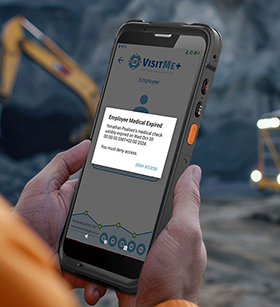
They may also need to enter restricted or high-risk areas where valid medical clearance or a completed induction is required before they can move around the site. A handwritten name in a visitor book does not necessarily confirm who the person is, why they are there or where they are permitted to go.
A digital visitor-management process can pre-authorise expected visitors, verify identity and contact information, record the reason for the visit and notify the relevant host. It can also present safety or induction information, confirm required documents and maintain an accurate record of who is currently on site.
If an occurrence or incident occurs, this record supports the investigation and helps emergency teams account for everyone during an evacuation or roll call. This supports security and also assists with safety, emergency response, and operational planning.
After all, knowing who entered the site is only half the story. A business should also know whether they left, and what they were authorised to do while they were there.
Turning exceptions into operational intelligence
Most site transactions will happen exactly as expected. The greatest insight often comes from those that do not. Perhaps a driver arrives in a different vehicle. A container number does not match the booking. A required document has expired. An inspection fails. A delivery arrives without the correct reference, or a vehicle leaves later than expected.
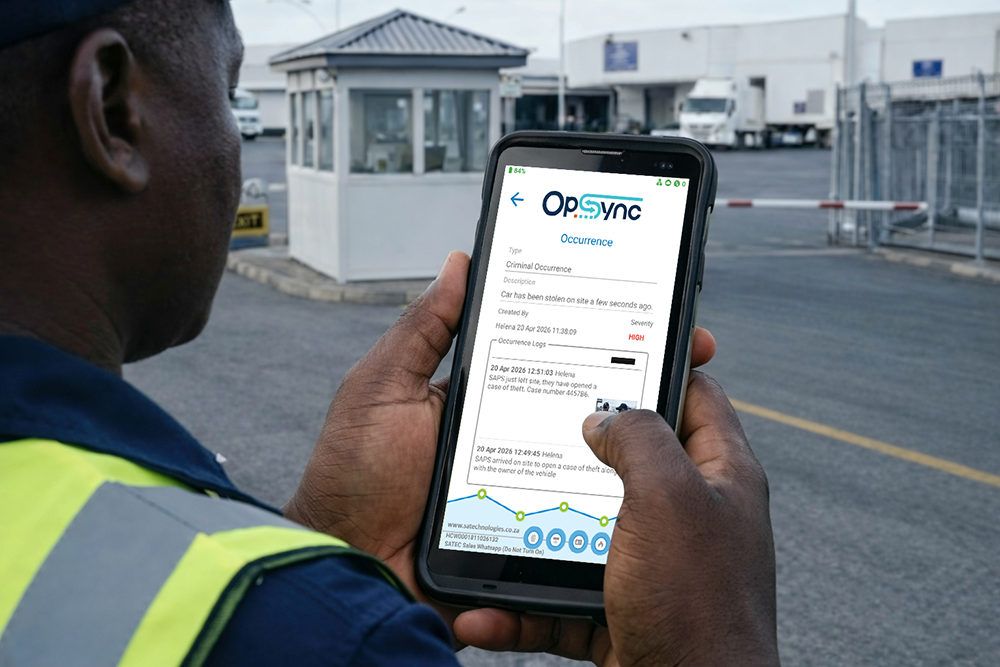
These events should not disappear into a handwritten note, an informal email, or a WhatsApp message. They should be recorded as exceptions or occurrences, supported by photographs and notes where necessary, and tracked until they are resolved.
Over time, this information helps management identify repeated risks and operational weaknesses, while also revealing opportunities to improve internal processes and logistical performance. It may show that a particular supplier regularly provides incorrect vehicle details, that one access point experiences frequent delays or that the same inspection item repeatedly fails.
Exceptions should never become expectations. When they are treated as critical occurrences and managed consistently, they become useful operational intelligence.
Putting the connected model into practice
Connecting access control to operational workflows is not simply about replacing physical hardware. It is about unifying the way the data surrounding that hardware is captured, validated, shared, and controlled. This connected model is already taking shape through solutions such as VisitMe and OpSync.
VisitMe supports visitor, driver and gate-access processes by digitally connecting bookings, identity and vehicle information, approvals, check-ins, check-outs and access records. OpSync extends this principle into logistical process management by linking drivers, vehicles, trailers, containers, references, inspections, timestamps and occurrences within a defined workflow.
Together, these solutions demonstrate how capturing information at the source can create a reliable and defensible audit trail across the site. The underlying principle remains simple: capture information once, validate it at the source, reuse it at key checkpoints and flag exceptions as they occur.
The objective is not to replace every boom gate, scanner, tracking device, safe or telematics platform already in use. It is to connect the operational information surrounding those technologies so that the business can make better-informed decisions, identify current and emerging risks, and streamline its logistical operations, making them safer and more efficient.
Gate access, visitor management, logistics, asset tracking and incident reporting should not operate as separate checkpoints. When they share verified information across the same process, sites gain a clearer view of every asset, every handover and every decision from entry to exit.






© Technews Publishing (Pty) Ltd. | All Rights Reserved.
 printer friendly version