


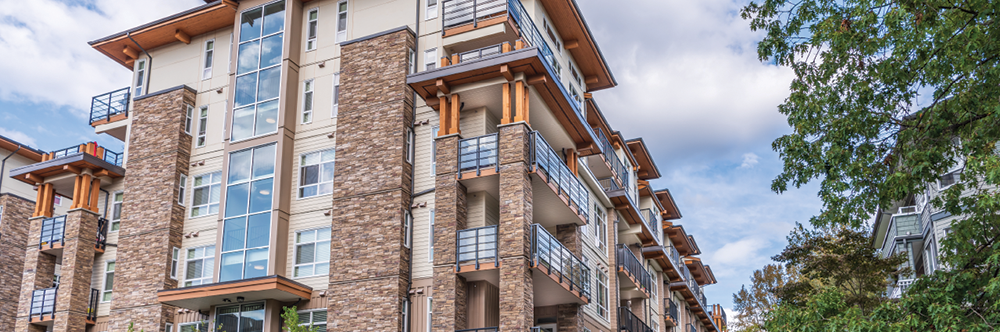
Video entry systems control communication between visitors at a building’s entrance and the people inside. They are most commonly found in private homes or apartment blocks. In recent years, many businesses have adopted video entry systems to welcome visitors to their premises.
The most obvious benefit of video entry systems is the ability to see and speak to a visitor before granting them access. In some places, the entrance of a building is a long way from its perimeter access point. For example:
• An apartment block, where the people in the flats on the top floor cannot see who is at the main entrance on the ground floor.
• A single-family home with a long driveway, where the residents cannot see visitors when they arrive.
• An office building with a perimeter fence and locked pedestrian gate next to automated carpark gates.
With video entry systems, the people inside the premises can see who the visitor is and speak directly to them before granting them access. For residential and commercial buildings alike, this offers greater peace of mind for those inside. Nobody unauthorised can gain access unless someone on the inside manually grants them entry.
What do you need for a video entry system?
The two key components of a video entry system are:
• An external door station.
• An internal monitor.
The door station is located outside the secure door or gate. This would be on the outside of the building’s main entrance door for an apartment block. For a pedestrian gate at the end of a driveway, it would be on the public street side of that gate. The door station consists of a camera, microphone, and one or more call buttons. For a single residence or business, only one call button may be required. There may be one call button per internal unit for apartment blocks or other premises with multiple tenants.
Internal monitors are installed inside the secure side of the door or gate. In an apartment block, one internal monitor would be inside each apartment. A single-family home might have one monitor by the front door and others in different rooms. If all were networked together, all the monitors would receive calls from the door station simultaneously. That way, residents do not need to run across the house to answer the monitor at the front door as quickly as possible.

How do video entry systems work?
When visitors approach the secure door or gate, they press a call button on the external door station. If there are multiple call buttons, they should be labelled to indicate which unit on the inside each is connected to.
When the call button is pressed, it sends a signal, usually via one of three ways, depending on the technical configuration of the system: IP, hard-wired, or GSM.
IP video entry systems
IP stands for Internet Protocol. These systems use an ethernet cable to facilitate communication between the door station and the internal monitor. IP systems are often preferred in larger buildings because they can be added to existing building networks, making them more reliable. They also do not require as much invasive wiring as hard-wired systems.
Hard-wired video entry systems
Hard-wired systems transfer information from the door station to the monitor (and vice versa) over physical wires connecting the two components. They operate on their own network. A hard-wired system can be a great solution in smaller buildings or new-build projects. However, in some cases, another method might be more effective. For example, for a single home with a long driveway, a very long cable would have to be run from the external door station to the internal monitor, which might be inconvenient.
GSM video entry systems
GSM stands for Global System for Mobile Communications. You know this technology already – it is what is behind mobile data on smartphones. It is where the ‘G’ in 3G, 4G, and 5G comes from. In these systems, the signal is sent via a SIM card in the door station to the monitor inside (or to a resident’s mobile phone), where they can pick up the call.
Controlling access with a video entry system
When a call comes to the monitor (or a connected mobile phone) from the door station, the people inside can decide whether to grant access. If access is denied, nothing happens, and the secured door or gate remains electronically locked. If access is granted, a signal is sent from the monitor (or phone) to trigger a relay to release the electronic lock.
2EASY video entry
2EASY is a door entry solution from CDVI that is quick and simple to install and offers users audio and video communication for an affordable price. With both a wired and an IP version available, 2EASY is flexible and adaptable to various projects. Additionally, the free smartphone app allows users to see and speak to visitors and control the door lock remotely (with a Wi-Fi-enabled monitor).
For private residences, 2EASY offers a simple and reliable home security system. Residents can have confidence in always knowing who is at the door or gate and only allowing access to authorised people. For university accommodation and apartment blocks, 2EASY is a simple and innovative way to control entry to flats. Students or residents can come and go as they please and feel safe in the dependable security of their building.
For commercial premises, 2EASY is a sleek solution for managing entry for visitors and employees. Businesses can get the best of both worlds by making visitors feel welcome as soon as they arrive while strictly ensuring that only authorised individuals can enter.
| Tel: | +27 65 677 0886 |
| Email: | [email protected] |
| www: | www.kestreldistribution.co.za |
| Articles: | More information and articles about Kestrel Distribution |






© Technews Publishing (Pty) Ltd. | All Rights Reserved.
 printer friendly version