


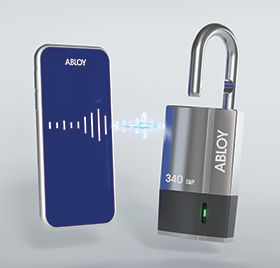
Electronic locks have been with us for many years and found fast acceptance in markets like the hospitality industry. Other industries have adopted the technology more slowly, but there seems to be a consistent demand for electronic locks of diverse types for many markets, from homes to multi-tenant commercial environments.
While we have come to expect markets to change dramatically, especially in the technology world, when asked if the market for electronic locks changed much over the past year, Gavin Macdougall, product manager, Digital and Access Solutions, ASSA ABLOY Opening Solutions, says it has not changed significantly. “While electronic locks are still in high demand from the hospitality sector, electronic access control in the commercial sector has an arguably higher requirement for electronic locks, as businesses not only look at applying electronic access control to the traditional access control doors, but also extending it to areas such as server cabinets and racks, HVAC and electrical distribution boxes.”
As far as the mechanisms used to operate these locks are concerned, COVID naturally saw biometrics becoming the flavour of the day in many commercial settings, with some companies even moving away from fingerprint-based biometric technologies to contactless systems. However, many also adopted the card or fob approach to avoid potential contamination. He says, however, that card- and PIN-based access control is still very popular, and an increasing number of companies are now looking into mobile keys.

Standalone is a lonely place
It gets a bit repetitive when talking about security technology, but the ability to integrate locks’ functionality into broader management systems and other security and operational applications (workforce management, for example), is critical to effective solutions that add value to the business. And in today’s connected world, the idea of hosting your data in the cloud is not such a stretch of the imagination.
Macdougall says that enquiries into being able to control building management, access control, fire alarms and CCTV from one integrated platform continue to grow. “Service providers have recognised this, and we are seeing more systems being ‘opened up’ for integration.”
He adds that cloud-based systems remain a hot topic and many companies (especially ones with multiple geographical locations they need to manage from a centralised console) are heading along this route. Of course, not everyone is sold on the cloud and there are still companies that prefer to have their databases and systems hosted locally, on-premises.
In a similar fashion, while the market for wired electronic locks (in other words, locks controlled via network cables) are still very much in demand, more companies and system integrators are seeing the benefits of going wireless due to the increased reliability of wireless networks and also because of the reduced labour and costs involved in setting up wireless networks instead of running cables throughout a building.
“We are steadily seeing systems becoming a hybrid mix of wired and wired electronic locks,” Macdougall states.

When Eskom attacks
If there is one thing all South Africans agree on, it is their opinion of Eskom and the government leadership (or lack thereof) that has led to constant planned and unplanned blackouts in the country. For all their benefits, electronic locks require electricity to function, albeit a very small amount. Batteries in the locks are a good option as they also save on linking each lock to an electrical circuit, but what happens when the batteries run out? And what about those without built-in batteries? How can we be sure that people can still come and go, and more importantly, prevent unauthorised people from getting in when there is no power.
This is an old question electronic lock vendors have had to deal with, but Macdougall says it is still relevant. “Most companies have equipped themselves with backup generators or inverters and they should bear their electronic access control systems in mind when installing these power backup systems, especially where electromagnetic locks (maglocks) are used.
“Having a relatively low-capacity battery backup power supply to keep your maglock running when the mains power is down is fine for short, infrequent power interruptions, however, when we find ourselves with multiple rounds of loadshedding in a 24-hour cycle, there is the risk that batteries do not have enough time to fully recharge between power outages.”
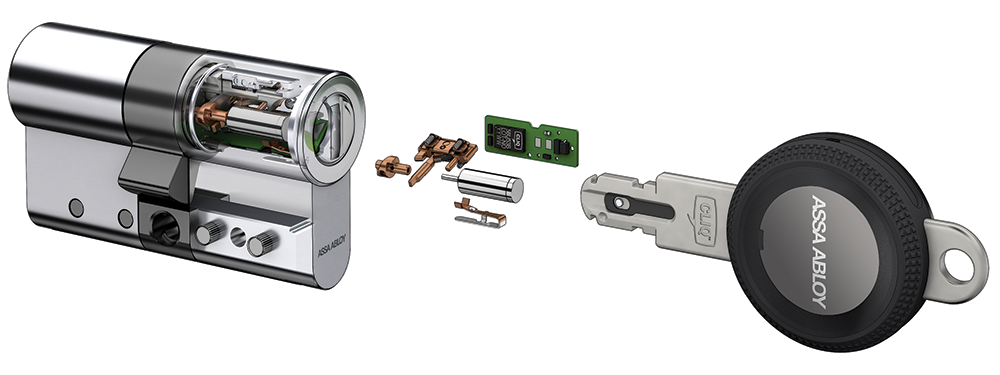
He adds that this is definitely an argument in favour of changing to ASSA ABLOY Opening Solutions’ battery-operated wireless locks, like the range of Aperio wireless locks that can integrate into most access control systems. Or he suggests that where the application requires a wired electronic lock, users consider using a fail-secure electric strike or electromechanical lock cases that will not ‘unlock’ if the battery backup fails, as a maglock would. “ASSA ABLOY has a comprehensive range of electric strikes and Elmech lock cases that can be considered as great alternatives to maglocks.”
Given the scope of ASSA ABLOY’s global reach, Macdougall says the group has a global range of management platforms that are suited to almost any access control system, “Impro for wired and wireless access control, with the opportunity to integrate into time and attendance, building management, and video management systems; SMARTair wireless access control; and CLIQ for digital cylinders and padlocks, to name a few. Not to mention, we have the very versatile range of wireless Aperio electronic locks in our portfolio where integration has been done with most of the major OEM electronic access control and BMS (building management systems) service providers in the industry.”
Looking ahead, he advises the market can expect to see the new Aperio KL100 cabinet lock that will be launching in the first half of 2023. This new product will extend access control systems to data cabinets, cupboards, lockers and drawers, without the hassle of running wires or power to their opening.
| Tel: | +27 11 543 5800 |
| Email: | malckey@technews.co.za |
| www: | www.technews.co.za |
| Articles: | More information and articles about Technews Publishing |
| Tel: | +27 11 761 5000 |
| Email: | za.info@assaabloy.com |
| www: | www.assaabloy.com |
| Articles: | More information and articles about ASSA ABLOY South Africa |






© Technews Publishing (Pty) Ltd. | All Rights Reserved.
 printer friendly version