


Digital transformation is affecting all parts of life. From how we conduct finance and interact with our government, to how we work and conduct business, to how we get to school and even how we gather with our families. At the core of this widespread digital transformation is identity – how we prove who we are in online and offline spaces.
Over the last decade, new technologies like biometrics, cloud computing, mobile devices, secure encryption and artificial intelligence helped build the basis to allow users to assert their identities online, but user privacy was left vulnerable. Massive data breaches caused by poorly implemented privacy practices and a continued reliance on knowledge-based authentication (KBA) led to a proliferation of personal information online, providing the basis for a new wave of synthetic identity fraud.
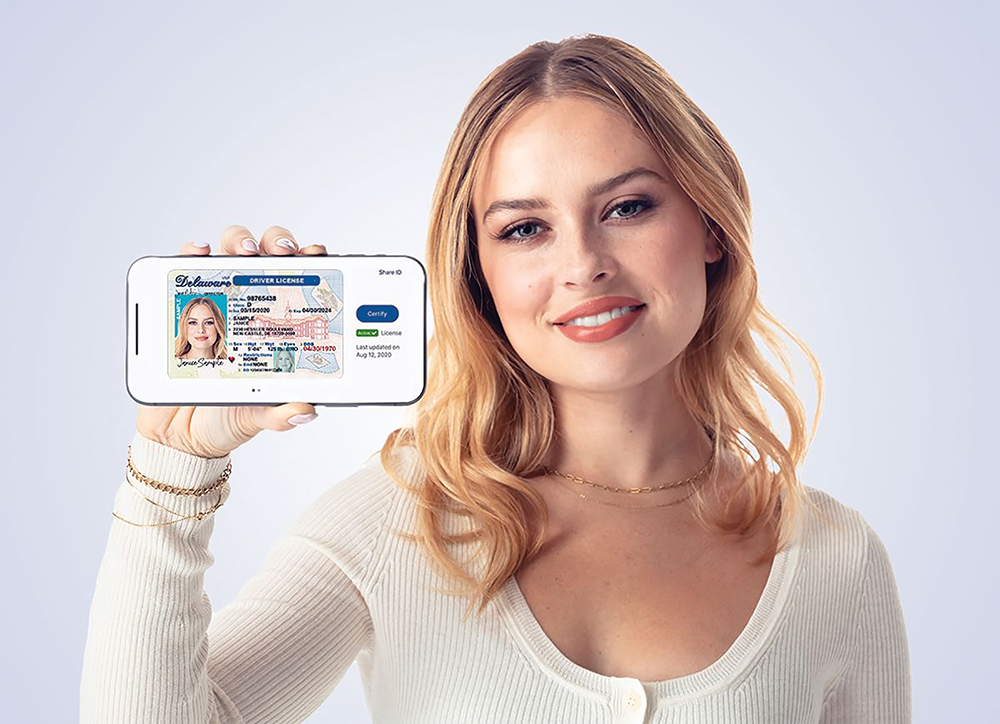
Thankfully, the solution to protecting identities and empowering users has emerged: IDEMIA Mobile ID, a standards-defining converged identity technology that keeps users safe, enhances their privacy and improves their experiences as they navigate their digital and physical lives.
IDEMIA Mobile ID is an example of Identity on the Edge, a powerful design philosophy that puts privacy first while enabling the full potential of digital transformation to make life safe, secure and convenient. In this paper, we will further explore the privacy implications of digital transformation and delve into the components of Identity on the Edge in order to illustrate how a robust Mobile ID technology can make strong trusted identity a defining feature of our bright future.
The importance of privacy in the era of digital transformation
Online fraud has been a serious concern for years, as digital transformation has continued to sweep across various sectors around the world. But in the wake of the Covid-19 pandemic, alarm bells are going off louder than ever.
The pandemic pushed all kinds of organisations – from banks to government agencies to retailers – into digital channels as social distancing guidelines emerged and lockdowns were implemented. And in many cases, organisations were not fully prepared and did not have time to implement effective cybersecurity safeguards. Meanwhile, fraudsters followed their targets into the online space, seeking to take full advantage of the relative lack of security.
The result is a profound threat of online fraud. A TransUnion analysis found that fraudulent transactions targeting international businesses were up 46% in 2020; LexisNexis, meanwhile, estimates that in the first half of the year, one in seven new accounts were likely fraudulent.
The fraud threat is also evolving. Bot attacks and stolen credentials are still in play, but there are also newer, more sophisticated threats such as synthetic identity fraud attacks in which AI technologies are used to construct fake identities.
Outdated security
Much of this carnage is facilitated by organisations’ reliance on outdated security practices, particularly with respect to knowledge-based authentication (KBA). The most familiar form of KBA is the password – a concise token of secret knowledge that, in theory, is known only to the authenticating party. Other popular forms of KBA include PINs, passcodes and designated questions (e.g., “What was the name of your first pet?”).
The key problem with KBA is that it simply has not kept pace with evolving approaches to online fraud. Passwords and PINs can be compromised through brute force attacks, or even guessed, while security questions can be overcome through data searches on the Internet.
And cracking the password of one account can quickly lead to more intrusions, such as cases in which a hacked email account is used to reset a password for digital bank account access. Virtually all cybersecurity experts agree that KBA is irredeemably flawed as a security framework and advocate for the use of more secure authentication factors, such as biometrics.
Post-password solutions
Biometrics enable one of the most secure approaches to authentication. Unlike authentication based on ‘something you know’ – such as a password or PIN in a KBA framework – biometric authentication is based on ‘something you are’.
No-one else has access to credentials like your fingerprint or your face and they certainly can’t be guessed or stolen the way a password can. Biometrics are also far more convenient than KBA credentials, as they can’t be forgotten and are always at hand.
That having been said, there are still security vulnerabilities to consider with respect to biometrics. One of the most important is the risk of data breaches when biometric templates are stored on a server. If an organisation collects end users’ biometric data for the purpose of matching during subsequent authentication sessions, that data will be stored in a database that may itself be an attractive target for hackers – especially if it’s stored alongside personal identifiable information (PII). A successful hack attack against such a database would have devastating consequences, with sensitive data spilled into the Dark Web alongside biometric information that could be replicated in future spoofing attacks.
A future-proof design philosophy
The fraud and data breach landscape of the current decade cannot be addressed on an individual solution level. Truly safe and privacy-enhancing security requires a paradigm shift that informs the conception and design of digital identity technologies. For IDEMIA, that core design philosophy is called ‘Identity on the Edge’.
On a system level, Identity on the Edge is built on three pillars that represent the foundation of a robust and user-friendly Mobile ID. These are touched on below.
The issuer system of record
Working with a trusted identity holder, such as a state organisation where enrolling in Mobile ID requires an official state-issued ID, which itself is only obtained through a powerful in-person identity proofing event.
IDEMIA’s Identity-as-a-Service (IDaaS)
IDEMIA’s IDaaS provides the standards-defining infrastructure that allows for Mobile ID to be deployed at scale with relative ease. The cloud platform acts as a secure throughway between the Mobile ID device holder and the system of record, ensuring that the data on the device is always trustworthy and up to date.
A user device with Mobile ID
For the end user, their mobile device with their Mobile ID is as trusted as a driver’s licence, but much more versatile, convenient and private. A Mobile ID can be used offline in the same way a physical credential can, only with pseudonymous features (like age-checks). But the real game-changer is in how Mobile ID bridges the gap between the physical and online worlds during this time of digital transformation: just as a Mobile ID device can be used to verify a user’s identity at a store or government office, it can also be used for secure login online.
The ‘Edges’ in Identity on the Edge are the system of record and the Mobile ID device. This is key to the privacy-forward concept that powers IDEMIA’s vision of Mobile ID: a user’s personally identifiable information does not need to be shared with a party outside of the identity issuer and the user. For relying parties that need to verify and authenticate users – that is, the entities between those two Edges – this means no need to store databases of valuable PII that are ripe for hacking, while still having the high-level of assurance provided by state-signed digital identity. For users, it means complete control of their identity and data, both online and offline.
Mobile ID versus KBA
As an alternative to KBA, Mobile ID is a versatile and intuitive solution that’s as trustworthy as a government-issued document, only used in a digital space. KBA is the standard legacy authentication method online and it is therefore subject to all the most common and highly evolved fraud methods and hack attacks. A password can be guessed, stolen, cracked, phished or purchased online in easily available databases for sale on Dark Web marketplaces. They can also be forgotten, which not only presents a major inconvenience to the user managing KBA credentials for dozens of different accounts, but also presents another attack vector for fraudsters, who can use account recovery methods to gain access to the accounts of their victims.
Even more advanced KBA methods are susceptible. Authenticator apps and SMS passcodes are vulnerable to phishing and other social engineering attacks, while complex password generators still succumb to brute force hacks and database leaks.
Mobile ID uses a variety of different authenticators, including PIN, biometrics and device factors, but these do not leave the device’s secure element, which might allow them to be intercepted. For example, the scanning of a biometric on the Mobile ID could release a key that is used for an online portal, so none of the user’s data, biometric or otherwise, leaves their device. The Mobile ID simply confirms you are who you claim to be and the relying party with the authentication request can trust that assertion.
Maintaining integrity and interoperability with liveness detection
Identity on the Edge can only be achieved with the strongest identity technologies on the market, without which the use cases described in this paper would simply not be viable due to their high-risk nature. An integral aspect of maintaining the chain of trust in an Identity on the Edge system is ensuring that every time authentication is required on the user’s mobile device, it is in fact the rightful user and not an impostor.
A biometric credential is naturally more secure than a password or other type of KBA, but advances in fraud methods have raised concerns about presentation attacks, or ‘spoofs’ – hack attacks that use material and digital artefacts in order to trick a biometric system into issuing a positive identification. Fake fingerprints and 3D-printed masks are simple spoofs that can be effective against consumer grade technology, but AI-powered deepfake technologies have challenged some of the best biometric security solutions. This has led to the need for liveness detection.
IDEMIA Mobile ID uses state-of-the-art liveness detection technology – lab-tested and compliant with the ISO 30107 Presentation Attack Detection standard – in order to confirm upon authentication that the credentialled user is present and not an impostor. In doing so, the high level of assurance built on the trusted foundation of the system of record is carried forward on the far edge of the system, with no risk of compromise via stolen devices.
Defining standards and interoperability
The ISO presentation attack detection standard is only one component that enables Mobile ID to remain trusted wherever it is used, while ensuring the safest and most private user experience. Because Mobile ID is a new technology meant to build on the long legacy of identity documents across states and eventually between countries, IDEMIA plays an active role in contributing to the international, national and industry standards that are defining the use of mobile IDs.
By working closely with the National Institute of Standards and Technology (NIST), the FIDO Alliance and OpenID Foundation and through its participation in mobile ID and mobile driver’s licence testing events that improve the drafting of the applicable ISO Personal Identification standard (ISO 18013-5), IDEMIA is ensuring that its Mobile ID is driving forward a unified user experience online, offline, remotely and in-person.
Mobile ID at the centre of the identity decade
With its ground-breaking Identity on the Edge framework, IDEMIA Mobile ID opens the door to a wide range of possibilities for strong identity verification online and in the real world. Innovative applications and use cases will inevitably emerge.
The convenience and administrative benefits that Mobile ID offers made perfect sense before 2020, but in the wake of the Covid-19 pandemic, it’s now clear that the solution can also play an important role in mitigating the spread of the virus. This is because Mobile ID brings even more services into the mobile channel, reducing the need for the kinds of in-person interactions that can facilitate the spread of the virus.
To read the full paper from IDEMIA, go to https://na.idemia.com/2021/06/01/identity-on-the-edge/ (or use the short link: www.securitysa.com/*idemia7).
How personal is biometric data?
New AI-enhanced spoofing techniques are on the rise, putting biometric security under threat. We can no longer rely on the strength of biometric authentication alone to prevent scalable hack attacks. A database containing sensitive user data and their biometrics is an enticing honey pot for bad actors. That’s why a viable Mobile ID should keep biometrics and authentication on the user device, with the rest of the PII. That’s why IDEMIA trusts in Identity on the Edge.
| Tel: | +27 12 679 2900 |
| Email: | [email protected] |
| www: | www.idemia.com |
| Articles: | More information and articles about IDEMIA |






© Technews Publishing (Pty) Ltd. | All Rights Reserved.
 printer friendly version