


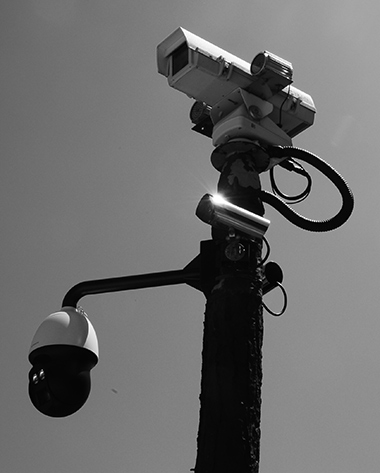
When we talk about enterprise security, it can only mean two things: logical (network/cyber) security and physical access control. While physical security, consisting of alarms, access control and CCTV has been in place for over two decades, network security is a relatively recent phenomenon.
Cybersecurity is mainly concerned with viruses, malware, and IP theft. However, network and physical security were never independent. The merging of both has been mentioned for many years, but the implementation is quite complex for many enterprises.
For this reason, they are still treated as siloes, and convergence remains long overdue.
The following are eight reasons why unifying physical and network security is crucial:
1. The explosion of IoT
Physical security assets such as control panels, readers, alarms, and security cameras are now connected to the Internet, thanks to the advancements in IoT. However, it also makes them vulnerable to attacks.
A decade ago, it would be hard to imagine that HVAC systems could also pose a significant risk to an organisation's safety. However, this happened in 2014 when hackers exploited a peculiar defect in Target's HVAC systems and stole the personal data of nearly 40 million customers.
This is an example of how physical security assets are threatened due to lapses in network security. However, the concern is not limited to just cyber-attacks.
The scenario can be the exact opposite, where a highly secured network is left unprotected due to lapses in physical security.

2. Threats to physical systems
Instead of penetrating network security, the attacker could decide to leverage the gaps in physical security. By doing so, they can gain access to building control operations such as the energy grid, video surveillance cameras and smart locks.
In that case, no level of cybersecurity can stop the attacker from entering the facility and walking out with the server. For this reason, the premises must be as secure as the network – something that is feasible with integration.
Think about this: as soon as an intrusion alarm goes off, the server room locks itself. Such robust physical security, combined with powerful cybersecurity, can protect servers on both fronts.
3. The need for centralisation
Visibility has been a big issue with connected devices. It is because most of the organisations don't have a centralised location to control IoT devices. Instead, these devices are connected across distant locations, such as a remote office, supplier's truck or a wind turbine. What complicates the matter is that many IoT devices are not manufactured with security in mind.
Hence, organisations not only need to centralise control, but also ensure that their connected devices are secure.
4. Coordination between OT and IT
Operational technology (OT) and IT don't operate in siloes anymore. We have observed that most organisations have separate departments for both. This needs to change. The integration should start with coordination between OT and IT teams.
Everything, right from industrial systems and manufacturing plants to mobile devices and smart cameras, is on the same network. Therefore, it makes sense that both IT and OT teams should be on the same page as well.
To achieve that, CIOs (chief information officers) and other senior executives should establish a security command centre where physical and cybersecurity teams can work together.

5. The affordability of technology
‘Smart’ tools, as we call them, are becoming cheaper and smaller. The affordability of technology leads to broader utility and availability. It also creates a frightening situation since malicious third parties no longer need a huge budget or sophisticated systems to hack into enterprise security.
Several sensor technologies, including pressure, smoke, temperature, optical, image, infrared and proximity sensors are blurring the line between digital and physical security as well.
For instance, setting the office temperature is now as simple as changing controls on a smartphone app. It is not something that security experts usually consider as risky or undefended. However, what happened in Target's case clearly establishes that these low-risk, automated systems need to be taken into account as well.
6. The proliferation of cloud-based platforms
Businesses are increasingly moving from on-premise IT infrastructure to cloud-based platforms. There are several reasons for doing this. Maintenance is no longer an issue since most of the updates occur via the cloud. Besides, vendors offer annual and monthly subscription plans which are budget-friendly for startups.
That said, cloud-based platforms are also supported by hardware (however minimal) within the facility. Only authorised personnel must get access to the system. Moreover, the emergence of cloud-based enterprise applications underlines the significance of IoT cybersecurity.
7. The efficiency of operations
The whole purpose of merging physical and network security is to enhance the efficiency of operations. We all know that physical security systems have been upgraded owing to smart features such as two-factor authentication. In addition, biometric scanning is generally used to secure physical access.
A live feed can be sent via the cloud to generate alerts when an intruder is detected by adding a motion-activated camera. Therefore, the unification of physical and network security stands to offer better protection to organisations.
8. Internal vulnerabilities
Without question, employees are an organisation's first line of defence. Traditionally, they have to manage multiple credentials to access their workspace and computers. Weak passwords can also pose a security risk for enterprises. It's common for IT help desks to receive multiple calls due to employees forgetting their credentials.
An integrated system can solve this problem. Besides, it's easier to train new employees on using a single interface to access both their workspace and computers.
The bottom line
Technological advancements present new security challenges to businesses. The role of a cloud services vendor, cybersecurity expert, IT security manager, and CIO is increasingly becoming tangled. In fact, new security roles such as IoT cybersecurity experts may arise in the future when the binary distinction becomes virtually impossible.
Organisations may still choose to hire different personnel to manage both components of security – physical and network. What matters is that each person assumes the greater responsibility of tightening the security of the organisation by integrating both components.
Adrienne Campbell is a security consultant and holds a Bachelor of Science degree in cyber/computer forensics and counterterrorism from the University of Illinois, Chicago. Hacking is one of the most misunderstood areas of modern life and she helps audiences that are interested in technology, coding and other fields to understand that hacking is something that can be addressed. You can find Adrienne at https://adrienne-campbell.com/






© Technews Publishing (Pty) Ltd. | All Rights Reserved.
 printer friendly version