


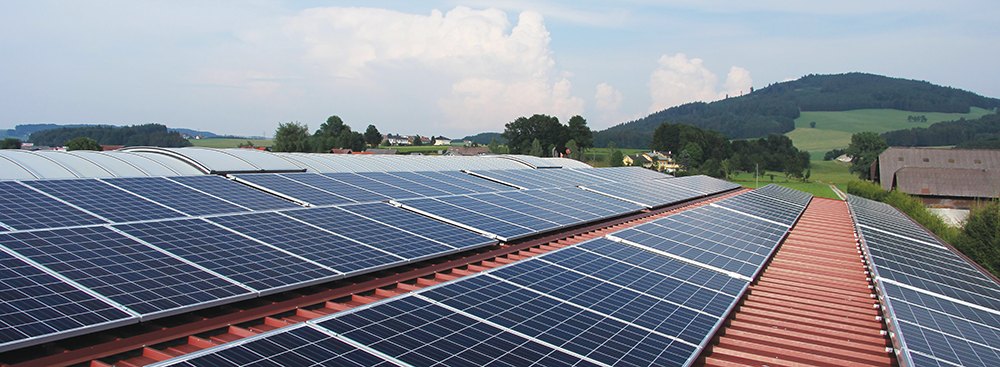

The reality of ongoing blackouts remains ever-present for South Africans. Households and businesses, in particular smaller businesses that do not have the luxury of large generators in an office or warehouse environment, continue to seek out alternative power sources to keep the lights on.
According to Gregor Kuepper, managing director of SolarWorld Africa, there has been a marked uptake in renewable energy solutions as consumers start preparing for the worst – ongoing Stage 6 load shedding. “Solar used to only be a solution for large-scale businesses or those with adequate space to house enough panels to support electricity consumption. Fortunately, thanks to innovation in this space, homes and small businesses now have several options available to provide temporary support when there is a power cut, and potentially long-term relief as the preferred ongoing power source.”
The SolarWorld Africa team has almost 40 years’ experience and a proven track record in sub-Saharan Africa. Kuepper explains how the following solutions will keep the lights on (or the kettle boiling) and machines running during load shedding, ultimately helping people to become more self-sufficient or grid-independent.
There are different types of solar energy systems: on-grid (grid-tied), off-grid, and on-grid with backup. “Grid-tied solar PV systems are most common in South Africa, as these are the most affordable and have the best business case. However, this does not necessarily ensure that you will be able to enjoy that cup of coffee during load shedding. Grid-tied solar PV systems will generally be programmed to switch off during load shedding,” Kuepper points out.
Why is this? It comes down to international safety standards. However, it does not mean South Africans have to remain in the dark. Kuepper sheds some light on the different solutions available.
Grid-tied photovoltaic (PV) system
A photovoltaic system, also known as a PV system or solar power system, is an electric power system designed to supply usable solar power by means of photovoltaics. The two main components are PV panels (DC power) and a grid-tied PV inverter (DC to AC).
Why do you need a grid-tied PV inverter? It converts the varying DC power from the PV panels into AC power, which it feeds to your household equipment and possibly into the grid. ‘Grid-tied’ means the inverter synchronises the frequency and the output voltage to its connected grid. If solar energy is insufficient, a grid-tied PV inverter switches and starts drawing power from the grid into your home. This ensures there is a seamless supply of power.
“This option saves electricity in the long run, with no backup required. The pure PV inverters are grid-tied, meaning they require the grid to switch on and convert the direct current into alternating current which is required by appliances in your home,” says Kuepper.
On-grid with backup
• PV and battery: This is a backup and later self-consumption optimisation (SCO) option. Self-consumption contributes to the distribution grid stability by avoiding voltage rises during peak PV generation periods such as the middle of the day, and helps to reach higher shares of installed PV in the electricity mix.
“When it comes to PV and battery, this can be served by either a hybrid (meaning PV and battery) inverter or separate battery and PV inverter,” Kuepper continues. “Your batteries act as backup power when the grid has failed, and during a normal day, PV can provide power in a house and charge these batteries. This stored power can then be used during the night, which is what we call SCO.”
• Battery backup: This is purely a backup solution and is usually sized to make sure that your essential loads are up and running during load shedding and other power failures. Under the banner of pure battery backup, you have various options such as a UPS, a battery together with a charge controller, and then, of course, a battery and battery inverter. Of these, a battery with a good and reliable battery inverter is the most reliable solution.
• Battery and hybrid inverter: This is the same as the battery and battery inverter option, except consumers have an opportunity to install PV panels at a later stage and do not have to add the extra cost of a PV inverter, as it would be PV-ready.
Off-grid
In the current South African energy climate, this option sounds very enticing. It does, however, require careful planning and sizing of your system. You would require a large enough PV array to serve your daily loads and charge the batteries for use at night – and in turn, a large enough battery bank to serve the loads during the evenings, and possibly during daytime when there is not enough PV generation. There is of course the option to add a generator or to use the grid as backup.
Kuepper advises that a tailored approach will see various renewable energy solutions and products being recommended and made available. “Consult the experts, weigh up the options and also find a solution that not only meets your electricity consumption needs, but that is also financially viable – and always consider the long-term benefits, as certain products are designed to go the extra mile.”






© Technews Publishing (Pty) Ltd. | All Rights Reserved.
 printer friendly version