


Cities in South Africa are no strangers to video surveillance. In fact, closed-circuit TV (CCTV) cameras have become so ubiquitous that, as urban dwellers, we may well feel uncomfortable if we did not notice one peeking out from the corner of a building. This need to satisfy our ‘perception of safety’ is a huge contributor to the exponential growth in surveillance hardware all around the world. According to research, the global video surveillance industry will grow with a CAGR of almost 13% from now till 2027[i].
Digital technology has made possible upgrades to our cities and daily lives like never before. It is only natural that we expect video surveillance to experience a similar upgrade, so that all things that matter to us are better protected. And why shouldn’t we? According to the Maslow pyramid of needs (1943), safety and security ranks as the second-level basic needs that should be satisfied for all humans[ii].
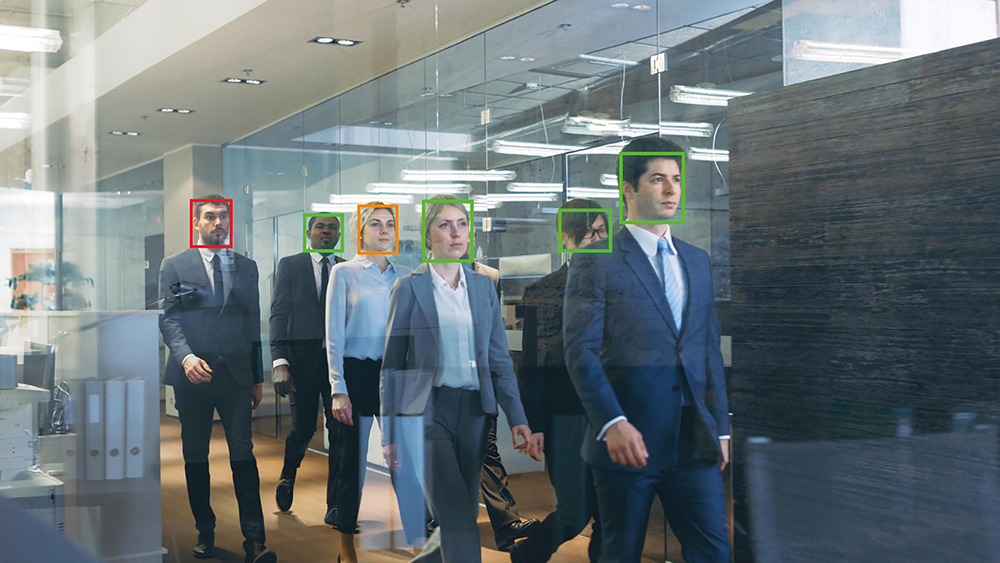
Historically the first recorded use of CCTV in South Africa was in the mining sector during the 1970s, in particular on diamond mines and gold refineries, to prevent the smuggling and pilfering of minerals[iii]. Digital technology has enabled the once stand-alone CCTV camera to be integrated into a security network. Delving deeper: a digitally powered video surveillance system which incorporates biometrics, such as facial recognition, is able to effectively protect all users of public spaces by quickly identifying persons of interest. It can also decrease security breaches by enabling access to highly controlled places only to legitimate individuals.
Adding algorithms to assist humans
Coupled with advanced algorithms, such a security network has the capability to sift through tons of data that has been collected through the course of the day/month/year. When accessed in real-time or post event, this much more accurate data set enables the human factor, such as law enforcement officers, to come to a decision and/or conclude investigations at a much quicker pace. According to Deloitte, digital technologies, including more predictive policing, can enable 20-35% faster response times to emergencies[iv].
Should we be unfortunate enough to become a victim to a crime, we expect that the perpetrator be apprehended quickly. A digitally and biometrically enabled video surveillance network can definitely help to achieve this end.
It must be said that with greater capability, comes greater responsibility. While video surveillance is a common fixture in our daily lives, there are currently only a few laws in place regulating the roll-out of surveillance equipment in private and public spaces in South Africa. There is also much less said about the ownership and usage of the data that is captured by such equipment[v]. Hence the threats of data abuse and/or leak loom large in the background.
The privacy question
To reassure residents and citizens that their right to data privacy is being respected while enjoying more protection requires close collaboration between all relevant stakeholders. This group of stakeholders needs to include lawmakers, data privacy experts and technology providers. Together, this collection of people need to come up with a regulatory framework that satisfies the following:
• Be transparent as to how, why and where real-time data analytics are used.
• Communicate on what happens with the analysed data.
• Ensure maximum data security.
• Define tight frameworks to minimise the risk of misuse.
As the leader in augmented identity, IDEMIA continues to successfully deliver trusted technology solutions to its customers. For example, its Augmented Vision, a video analytics solution designed to survey and protect buildings, infrastructure and areas of interest. Thanks to its powerful algorithms, Augmented Vision helps to boost the efficiency of operators to find leads in a faster and more automated way and provides actionable intelligence while monitoring video flow. Adhering to its principle of privacy by design, only authorised personnel are allowed secure and frictionless access to the system, to ensure maximum data privacy.
As our cities get smarter, so too should the eye in the sky that is meant to protect all that matters to us.
[i] www.securitysa.com/*idemia3
[ii] www.securitysa.com/*idemia4
[iii] www.securitysa.com/*idemia5
[iv] www.securitysa.com/*idemia6
[v] www.securitysa.com/*idemia5
| Tel: | +27 12 679 2900 |
| Email: | [email protected] |
| www: | www.idemia.com |
| Articles: | More information and articles about IDEMIA |






© Technews Publishing (Pty) Ltd. | All Rights Reserved.
 printer friendly version