

How can South Africa’s mines embrace digital transformation?

Issue 5 2021 Mining (Industry)

By some estimates, South Africa has as much as R35-trillion worth of untapped mineral wealth. Despite that, the country has in recent years not attracted sufficient investment to allow for new mines to be opened or for substantial exploration campaigns to be carried out.

One way to fuel new growth in the sector is for it to embrace digital transformation. Despite the unique challenges associated with South Africa’s mining conditions, embracing new technologies and digitally-driven processes could result in mass benefits to the local mining sector.

That was the messaging from a mining round table hosted by Huawei and The Southern African Institute of Mining and Metallurgy (SAIMM), which featured experts from across the industry sharing some of the latest digital transformation trends in mining as well as their thoughts on how they could apply to South Africa.


Professor Barry Dwolatzky.

According to Ulrich Graf, senior engineer: Industry4.0 and Industrial IoT, at Huawei, we are rapidly moving towards a point where mine environments are “all connected, all sensing, and all intelligent”.

Leading these changes, he says, are global wireless connectivity standards like Wi-Fi 6 and 5G which allow for much faster connections, improved reliability and latencies of less than 1 millisecond.

That allows for things like autonomous and remote-controlled trucks, excavators and other vehicles. Importantly, it also allows for mines to embrace the ‘digital twin’ concept. That is a virtual representation that serves as the real-time digital counterpart of a physical object or process.

Embracing artificial intelligence, meanwhile, means that mines will be more productive and safer, thanks to things like real-time resource scheduling, allocation, optimisation and risk level estimation, making evacuation easier.
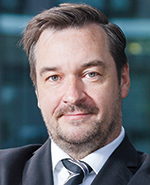

Ulrich Graf.

According to Jean-Jacques Verhaeghe, programme manager at Mandela Mining Precinct, digitalisation, technology research, development and innovation require a ‘unified and holistic approach’.

The industry, he says, needs to “contribute towards the national skills development imperative and look for solutions that leverage hyper-connectivity”.

Professor Barry Dwolatzky, director of innovation strategy at the University of the Witwatersrand, points out that developing skills for the future is partly about ensuring that we continue to educate people with foundational skills in areas like telecommunications, coding, modelling and data science. To this we should add newer areas of specialisation such as AI and IoT.

When it comes to building those skills, he believes that there’s “nothing particularly special about mining in terms of peak level skills”.

Additionally, he says, the industry needs to address fears that the adoption of technology will result in job losses. “People immediately fear they’re going to be replaced by robots,” he says. “As smart as robotics is, there are still things people do better.”

Instead, he says, it should be viewed as something that allows machines to take on dangerous tasks.

While all the speakers acknowledge that the depth and design of most South African mines will make it difficult for them to be fully automated, they were all unequivocal about the potential impact that digital transformation could have on the country’s mining industry.

“By developing technological solutions that increase the safety and productivity, reduce the costs and ultimately extend the life of mines, will work for the betterment of local communities associated with mining and for the country as a whole,” says Verhaege.

Huawei and the Mandela Mining Precinct recently signed an MOU that allows the Minerals Council South Africa, through the MMP and Huawei, to install and test Wi-Fi 6 kits in underground mines in pursuit of a digitalised mining industry. Planning is also underway that will enable research teams to define and test various scenarios at a suitable mine in South Africa.

The Mandela Mining Precinct is a public-private collaboration between the Department of Science and Innovation (DSI) and the Minerals Council of South Africa. It is an initiative aimed at revitalising mining research, development and innovation in South Africa to ensure the sustainability of the industry.




Share this article:
Share via emailShare via LinkedInPrint this page


Further reading:

Global security in 2026
Editor's Choice News & Events Security Services & Risk Management Industrial (Industry) Mining (Industry)
The World Security Report 2026 states: “In a world of increasing volatility, physical security has evolved. It is no longer just a defensive measure; it is a critical driver of corporate value.”

Read more...
Who is to blame for autonomous mistakes?
Editor's Choice Security Services & Risk Management Industrial (Industry) Mining (Industry)
Most supply agreements for AI-integrated equipment still closely resemble plant hire contracts from ten years ago: bilateral, human-focused, and silent on who bears the risk when a machine makes a decision on its own.

Read more...
Enhancing mine fleet safety
Asset Management Mining (Industry)
Probe IMT has partnered with Optix to bring safety technologies to mining operations across southern Africa, addressing critical challenges in fleet safety and operations through monitoring, coaching and behaviour management.

Read more...
Controlling access for people and vehicles
IDEMIA STid Security Technews Publishing Editor's Choice Access Control & Identity Management Asset Management Industrial (Industry) Mining (Industry)
When it comes to access control, the security requirements of mines and the industrial sector are similar, requiring a layered approach that combines physical barriers, digital authentication, and continuous monitoring to protect personnel, assets, and operational continuity.

Read more...
Directory of Product and Solution Suppliers
Mining (Industry)
The Directory of Product and Solution Suppliers for the mining and industrial sectors includes the details of companies that provide products, advice and services to the mining sector, primarily, but not limited to the areas of security and risk.

Read more...
Managing mining physical security risks
Security Services & Risk Management Mining (Industry) Facilities & Building Management
[Sponsored] Risk-IO, a web app from Zulu Consulting, is designed to assist risk managers in automating and streamlining enterprise risk management processes, ensuring no steps are skipped and everything is securely documented.

Read more...
Risk-IO manages mining security risks
Security Services & Risk Management Mining (Industry)
[Sponsored] A local mining company with three large operations experienced increased security costs. The liability included no standardised risk assessment, poor management of the efforts to mitigate hazards, and unauthorised access with subsequent theft. The reactive approach to security was not only expensive but also wasteful in the sense that the costs were poorly managed, and there were no metrics to show improvement or trends in incidents.

Read more...
Watermist suppression in mining
FS Systems Fire & Safety Mining (Industry) Products & Solutions
Watermist suppression systems are highly effective in suppressing flames and controlling heat spread, especially in confined spaces commonly found in mining environments, by generating fine droplets with an increased surface area, enabling rapid heat absorption and cooling during fire incidents.

Read more...
Gas detection for mining
FS Systems Products & Solutions Fire & Safety Mining (Industry)
Flammable gas detection is critical in safeguarding mining operations, where combustible gases pose significant risks. Early detection of these gases helps prevent fires and explosions, which can lead to devastating consequences.

Read more...
Fire protection for a solvent extraction plant in Africa
FS Systems Fire & Safety Security Services & Risk Management Mining (Industry)
A prominent mining site operates a state-of-the-art solvent extraction (SX) plant, integral to separating and purifying metals from ores, which pose significant fire risks, as SX processes involve highly flammable organic solvents and elevated operating temperatures.

Read more...


While every effort has been made to ensure the accuracy of the information contained herein, the publisher and its agents cannot be held responsible for any errors contained, or any loss incurred as a result. Articles published do not necessarily reflect the views of the publishers. The editor reserves the right to alter or cut copy. Articles submitted are deemed to have been cleared for publication. Advertisements and company contact details are published as provided by the advertiser. Technews Publishing (Pty) Ltd cannot be held responsible for the accuracy or veracity of supplied material.


© Technews Publishing (Pty) Ltd. | All Rights Reserved.