

Sine wave surge protection devices

February 2016 Infrastructure

Modern day electronics, appliances and equipment need consistent and clean power. Surges on the power input can damage your favourite music system or any other electrical device either by a single surge or by multiple surges over time. In the mid 1990s a European Study by Unipede found that 80% of all surges have an amplitude of up to 1,2 kV and have a duration of 1 to 10 micro-seconds. At the time, these surges occurred more than 10 times per day and were caused from multiple sources on the power grid. This is on a power grid that is considered stable.

Damage from surges can be classified as follows:

1. Hard failures. This permanent damage is caused by a single surge of significant amplitude. This is typical of lightning surges.

2. System interruptions. This is a temporary malfunction that can be rectified by cycling the power of the equipment and no permanent damage occurs.

3. Latent failures. This type of damage is the most disputed by insurance providers and occurs from continuous exposure to transients (surges) and Electromagnetic Interference (EMI) or Radio Frequency Interference (RFI). These surges erode the performance of electronic equipment and eventually cause permanent damage. Typically this damage is caused by surges from the utility power provider or inductive loads such as motors on the property. EMI/RFI are the most under-protected type of surge and require an active sine wave tracking surge protection device.
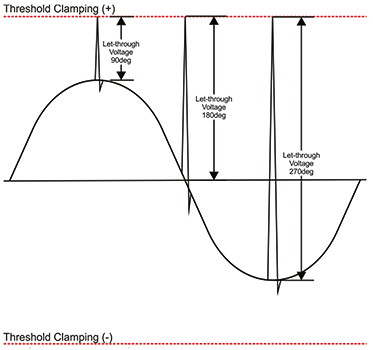
Figure 1. Threshold tracking technology.

What type of surge protection do you need?

BFR Digital’s single phase and 3-phase surge protection devices incorporate a hybrid topology.

1. Threshold Clamping Technology. This is traditional surge protection technology where surges are clamped once the threshold of a Metal Oxide Varistor (MOV) is reached.

2. Sine Wave Tracking Technology. This technology is active surge protection and:

a. Suppresses high frequency, low energy ring wave surges (transients) at any phase angle that the surge may occur. This is typical of loads that generate a back EMF.

b. Suppresses RFI and EMI.

c. With conventional light bulbs being replaced with LED bulbs, household appliances being fitted with energy saving electronics instead of mechanical controls and the use of inverters has led to EMC (Electromagnetic Compatibility) interference. Sine wave tracking surge protection suppresses the noise generated by EMC related interference.
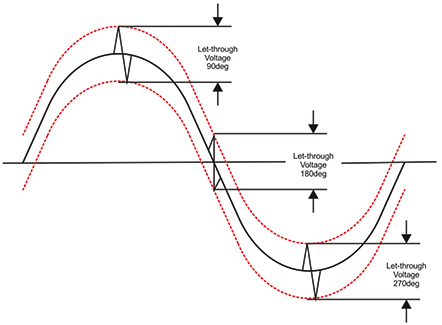
Figure 2. Sine wave tracking technology.

BFR Digital has incorporated these two technologies in a single device allowing for effective active protection against lightning surges, power utility generated surges, RFI, EMI and EMC transients.

After numerous requests for a product that does not need an electrician to install we have just launched a new Inline Sine Wave Tracking Surge Protector. This inline unit is a simple plugin professional device. There is also a short video available at www.bfrdigital.co.za/1_phase.html

For more information, contact James, BFR Digital, +27 (0)11 786 5575, [email protected]


Share this article:
Share via emailShare via LinkedInPrint this page


Further reading:

Quantum is coming
Infrastructure Information Security
The global cybersecurity landscape is approaching a turning point as quantum computing accelerates faster than most organisations realise; the shift is not a distant, theoretical concern, but a present-day business risk that demands immediate action.

Read more...
Cloud-ready BMS is reshaping building operations
Facilities & Building Management Infrastructure
Buildings may be getting smarter, but too many control rooms are still anchored to yesterday’s technology, such as on-site servers, rigid architectures and a patchwork of interfaces that are expensive to run and slow to evolve.

Read more...
While OT security is maturing, risk is not slowing down
Infrastructure Industrial (Industry)
Industrial organisations now rely on interconnected systems, remote access, cloud-based analytics, and unified IT and OT environments to maintain production. Fortinet’s 2026 State of OT and Cybersecurity Report illustrates why visibility, segmentation, and integrated security are essential.

Read more...
From drone market growth to application-level commercialisation
IoT & Automation Infrastructure
After years of pilot projects and technology validation, the question for the market is shifting from whether drones can fly safely and collect data, to where they can deliver repeatable operational value at scale.

Read more...
AI-enabled NVR for Milestone XProtect
Surveillance Infrastructure Products & Solutions
As surveillance environments continue to grow in scale and complexity, organisations need infrastructure that is easy to deploy, simple to manage, and ready for AI-driven workloads.

Read more...
Industry perspective on industrial cybersecurity
Technews Publishing News & Events Infrastructure Industrial (Industry)
The Industrial Security Harmonization Group has released a joint industry perspective highlighting a critical truth in industrial cybersecurity: secure communication is not determined by protocols alone, but by how they are deployed and managed in real-world environments.

Read more...
Cyber resilience is the real defence
Security Services & Risk Management Information Security Infrastructure
Cyber resilience has evolved into a form of strategic agility, ensuring that when an interruption occurs, the business does not just survive; it snaps back into place before the market even notices a pause.

Read more...
Power, performance and profit
Power Management Infrastructure
Electricity remains the single largest operating cost for most data centres. In many African markets, power infrastructure is ageing or inconsistent, forcing operators to rely on backup generation to keep facilities online.

Read more...
Five signs your storage is holding you back
Infrastructure Surveillance
In the drive for business growth, organisations across South Africa are investing heavily in talent, applications, and strategy. Yet the foundational technology that underpins every digital interaction - data storage - is often overlooked.

Read more...
Service robot technology for residential complexes
Suprema AI & Data Analytics Infrastructure Residential Estate (Industry)
Suprema has signed a three-party memorandum of understanding (MOU) with Hyundai Motor Group Robotics LAB and Hyundai Engineering & Construction (Hyundai E&C) to collaborate on advancing residential complexes through service robot technology.

Read more...


While every effort has been made to ensure the accuracy of the information contained herein, the publisher and its agents cannot be held responsible for any errors contained, or any loss incurred as a result. Articles published do not necessarily reflect the views of the publishers. The editor reserves the right to alter or cut copy. Articles submitted are deemed to have been cleared for publication. Advertisements and company contact details are published as provided by the advertiser. Technews Publishing (Pty) Ltd cannot be held responsible for the accuracy or veracity of supplied material.


© Technews Publishing (Pty) Ltd. | All Rights Reserved.

