


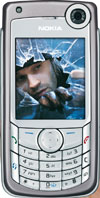
If you are going to be robbed at home in South Africa, police statistics show that there’s a 55% chance it is going to happen while you and your family are sleeping: somewhere between 9 pm and 3 am.
And then there is an 87% chance that the first contact between the perpetrators and you will take place inside your residence, after the criminals have gained forced entry.
Though there was a 'welcome decrease' (-7,4%) in aggravated robbery for the 2007/2008 financial year as compared with 2006/2007, according to SAPS (South African Police Service) statistics, it remains the country’s second-largest generator of contact crimes. Heading the list are attempted murder and murder, because the “vast majority of house robberies, car-jackings, business robberies, cash-in-transit (CIT) and bank robberies are committed with firearms and shots are frequently fired at victims.”
Aside from aggravated robbery, there is also the common or garden variety of robbery, which is unhappily on the increase. Police figures for the above-mentioned period show that robberies at business premises increased from 6689 in the previous financial year to 9862 while robberies at residential premises increased from 12 761 to 14 481 cases.
One can understand against this backdrop of rising criminality against people and property and an under-resourced police force, that security and armed response companies are desperate to be freed up from attending false alarms in order to address real incidents.
Waste
“One of the biggest problems faced by security organisations in South Africa is the deployment of manpower to alarms which turn out to be false,” says Michael Brett, national sales manager for Elvey Security Technologies. Explaining that false alarms are primarily caused by poorly designed and installed security systems or human operating error, he says that simple actions such as positioning hanging advertising banners or displays near ventilation outlets can also trigger false alarms as a result of the material moving in the air currents.
“In a country where crime is at an all-time high, response officers do not need to be out on a wild goose chase when a call for help comes in.”
No wonder then that video verification is being embraced so fervently by serious operators.
“Most people understand the basic workings of an intruder alarm system. They know it has detectors, door contacts and a control panel that is usually connected to a siren located on site. They also believe that by connecting the system, via a standard telephone line, to a central monitoring station (CMS) that their premises are well protected,” says Brett. “Sadly this is an illusion. The reality is that such devices do not make the doors any stronger or the windows any tougher – they will still break when struck.”
Warning of the ease with which experienced burglars are able to break into premises and then flee ahead of the police or response officers, Brett says intruders usually check out a site by looking through a window or obtaining inside information. “This gives them a good idea of what to target in terms of expensive office equipment and where it is located within the office. When they return to steal it, they will usually smash a window or force a door. Knowing that this will in all likelihood activate the alarm and send a signal through to the CMS, the experienced burglar moves with lightning speed, gathering what he wants and then leaving before the patrol officers arrive.”
The end result is a loss to the customer, accompanied in most instances by damage to the premises. Says Brett: “Though the alarm went off, it did not stop the burglary and it will not help in any way to gather evidence on the crime or the criminal.”
Video verification
Experts, including Zane Greeff, technical director for Elvey Security Technologies, swear that there is no better way to verify an alarm, hold-up, burglary or other life-threatening event than with video verification.
A fan of the OzVision range of security products, he lauds the video verification unit for its design and functionality. “The unit is seamlessly integrated into alarm panels to provide video services and will smoothly transmit pre- and post-video alarm signals with site identification and time stamp. What is more, when the signal is received by the central monitoring station, the pre- and post- video clip pops up on the automation screen, allowing the dispatcher to access the event in a timely manner. The same applies to notifications such as arming and disarming the alarm system. In these instances, open/close video reporting shows who opened and closed the business, who was with them and if they carried anything away with them.”
He adds: “Event notification documents the chain of events at any location and at any time, whether attended or unattended. This is significant because it allows people to manage their homes and businesses from anywhere in the world. Because the Ozvision unit has a built-in modem, all that is required is a computer with Internet connection and the correct software. In areas where telephone lines or Internet are not available, videos can be transmitted through cellular phone, a boundary-less application capable of sending video verification clips and event notification to various recipients.”
In the event that users fear an information over-load, the unit can be set to deliver only event-driven information. Greeff continues, “Traditional CCTV (closed circuit television) footage playing off a DVR (digital video recorder) can take hours to sift through to locate an actual incident. This obviously results in wasted hours as well as frustration to those in charge of extracting the desired footage. With event-driven information, every incident is time- and date-stamped, which makes it quick and effortless to find a particular event.”
Another huge plus is that the unit has a built-in sequential switcher, which allows in-house security personnel to monitor protected areas and switch between channels like a conventional CCTV system, he points out. “Also, there is no need to purchase special cameras as the video verification unit integrates with most CCTV equipment and will immediately communicate with the monitoring station in the event of video loss.”
Safe data transmission
Something else that needs to be considered is a universally secured network for security data transmission. “Have you ever tried to use the network during a peak period such as New Year’s Eve and find you are unable to connect?” he asks. “This could happen to your security footage, which could get lost in the system for a while and only delivered later when networks are less congested. Fortunately, with the imminent arrival of new technology that will allow for the establishment of secure lines dedicated to security emergencies, the problem of network failure will become a thing of the past. The OzVision product line has been designed to utilise this 'access point network' to ensure the reliability and integrity of data transmission going forward.”
Perhaps stating the obvious for some, Greeff nevertheless stresses the importance of ensuring that devices are in good working order if video verification is to work properly. “If you want door open video footage, you have to make sure that the magnetic contacts on the door are working. If they are compromised, the device will not trigger a signal to the alarm panel which in turn will not instruct the recording device to send pre- and post-video clip to the recipient.”
And last but not least: Greeff says OzVision’s remote video monitoring and off-site digital video recording capabilities makes it ideal for insurance purposes when it comes to being able to prove that there was no negligence on the part of the owner.
For more information contact Priyesh Jagjivan, Elvey Security Technologies, +27 (0)11 401 6700, [email protected]
| Tel: | +27 11 401 6700 |
| Email: | [email protected] |
| www: | www.elvey.co.za |
| Articles: | More information and articles about Elvey Security Technologies |






© Technews Publishing (Pty) Ltd. | All Rights Reserved.
 printer friendly version