


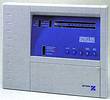
In recent years fire detection and alarm system technology has changed almost beyond recognition from systems that were being designed and installed in the early 1980s. The design revolution has been brought about by the continued evolution of microprocessor technology and its application to fire detection and alarm system products.
The control panel is the all important nerve centre of any modern fire detection system. It should, therefore, be a major factor when deciding which particular system to select from the considerable choice offered by the many different manufacturers; while users require systems incorporating the most advanced technology, ease of use is paramount.
A system which is difficult to operate, or a panel which does not give clear concise information, will soon lose the confidence of staff. The design of the annunciator panel is, therefore, vitally important.
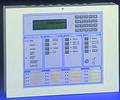
Conventional or addressable
Conventional two-state systems
This is the simplest type of system and continues to be popular around the world, providing economic solutions for installations which are small or where the protected area is relatively simple to search and evacuate. Conventional two-state systems tend to employ individual wiring circuits for each geographical zone of fire detectors. Alarm sounder circuits are either wired as common circuits throughout the building or split into separate circuits for various geographical areas of the building. Separate circuits are normally used to sequentially evacuate a building whereas common wiring demands complete evacuation when the alarm sounds.
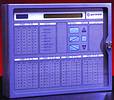
Intelligent systems
These systems offer benefits in speed of detection, identification of the location of a fire and easier maintenance. Intelligent systems also offer tolerance to faults in the system wiring, which allows a single pair of wires to be used to connect up to 200 devices to the system, allowing cost savings in the wiring of large systems. In larger installations, the benefits of improved maintenance and reduced cabling costs are overwhelming, and, nowadays, the price difference between intelligent and conventional systems has narrowed to such an extent that even for small installations, the use of an intelligent fire alarm system can be considered.
Intelligent systems offer a number of advantages over conventional ones.
* The location of a fire can be precisely located from the control panel.
* The use of looped wiring allows the system to function normally even with an open circuit in the loop wiring.
* The wiring cost of a system can be reduced by the use of a single pair of wires for up to 200 devices.
* The use of short circuit isolators allows most of the system to operate correctly even with a short circuit in the loop wiring.
* Detectors are constantly monitored for correct operation.
* The use of a 'pre-alarm' feature alerts staff to check whether a fire condition exists before the alarm is raised.
* The detector sensitivity is constantly monitored; any change causes a fault indication at the panel.
* The use of addressable loop-powered sounders allows the same wiring to be used for sensors, call points and sounders.
* The use of monitor modules allows contacts from sprinkler switches, existing fire alarm system, fire dampers etc to be monitored using detector loop wiring.
* The use of control modules allows sounder lines, air-conditioning systems, lifts etc to be controlled or shut down using the detector loop wiring.
* Drift compensation allows constant sensitivity to be maintained even when detectors become contaminated.
Whichever fire system type is selected, the following considerations must be given to the panel selected:
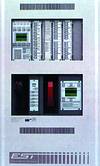
The primary task
With any evaluation of technology and information it is useful to discover the essential features - those things which must not be compromised at any cost.
Automatic fire detection systems must detect fires, give warning of their presence and provide signals which can be used to call in the fire fighters or to operate automatic systems, such as smoke extraction and fire extinguishing systems.
Because fires are a relatively rare occurrence (hopefully) fire detection systems must not only be able to detect fires but also give a warning if something has happened to prevent them doing so. We call this situation fault monitoring. In conventional systems this was generally restricted to monitoring cables, but with the advent of new technology it is now possible to monitor the operation of devices, give warning of processor failure, monitor signal level for any abnormality and send the results of all this testing to a remote manned centre for processing.
The essential task, however, remains the same: to detect a fire reliably and quickly so that lives can be saved and damage to property minimised.
All panels have to achieve the primary task and this is achieved via clear displays and simple means of control.
Types of display
Conventional fire systems had a host of indicators, be they LEDs or lamps and each lamp indicated a basic function: fire or fault in a specific zone, power on, remote signal isolated etc. These indications were a function of the technology but they have become a standard for the system. For example, the buildings are broken down into fire compartments, called zones, for safety and fire fighting reasons and it is quite reasonable to have an indicator per zone.
Zonal displays are an excellent indication of the position or extent of a fire, or fault situation, but provide very limited use with respect to sequential or time information. They are an excellent display for fire brigade use but are not so good as a maintenance or analytical tool. As a result, alphanumeric displays have become standard practice for addressable systems. They can provide a wide range of information, time, level, descriptive, as well as providing the possibility of interaction with the user, ie menu-driven controls and multiple choice options. However, they require the user to study them, rather than seeing the situation at a glance.
Types of control
In the same way that displays can be enabled or suppressed to suit the different requirements of situations or users, the controls of the user interface are subdivided by means of access levels. The most basic level is open to anyone, then there is the authorised user and finally the system engineer who is able to configure site-specific data and carry out repairs and modification to the system.
EN54 is quite specific about what type of control should be available to each type of user of the system. However, the choice of implementation is left to the system designer to a large degree. Some prefer large key pads, some numeric codes, others a series of key switches to enable different levels of access and others a series of pre-defined functions on specific control buttons.
For the occasional user, the controls need to be clear, unambiguous and non-threatening. For the service engineer or maintenance technician they may require the ability to change system settings and update site-specific data. The skill of the control panel designer is in making the interface look simple for the occasional user and yet meet the requirements of the standard.
Software in addressable systems has to be flexible and user-friendly, providing many facilities including:
* Isolation of devices either individually, by zone or entire line.
* Test facilities.
* Printout facilities.
* Adding and deleting devices.
* Password protection.
* Day and date timing.
* Storage of data.
Versatility and service provisions
The versatility of the control panel should be considered. How easy is it to extend the fire alarm panel from its basic stand-alone operation? Can it be incorporated, say, into a networked system if required? What ancillary devices are provided by the manufacturer? These include such items as colour graphic display units, VDUs, mimic displays, printers and repeater units.
Additionally, one should check what customer service is offered. The manufacturer should provide advice and assistance at an early planning stage through to a complete installation, testing and commissioning service. After-sales service is vital, so it is worth looking into just how comprehensive the maintenance cover is.
Conclusion
The end user wants a fire detection system that will not false alarm, and, in the rare case of a fire actually occurring, will detect fires early so that damage and the threat to life is minimised. The expectation is also that the increases in technology will enable manufacturers to offer additional features at a minimum cost so that the value of the system will increase faster than the price.
If low cost and high performance are the desired features, consideration can be given to conventional fire panels. For medium to large systems when more comprehensive features are required, addressable panels are the way to go.
Consideration when selecting a control panel should not be taken lightly as protection of life and property will depend on the final choice.
For details contact FDIA on tel: (011) 496 1701.






© Technews Publishing (Pty) Ltd. | All Rights Reserved.
 printer friendly version