


In Hi-Tech Security Solutions’ Retail Risk 2015 conference and the associated review – which can be found at www.securitysa.com/8481a – two presentations focused on licence plate recognition (LPR), also called automatic number plate recognition (ANPR).
The presenters focused on the rollout of LPR across Cape Town and the capability to link various private cameras to the Metro Police control room. This allows the authorities to track a vehicle across Cape Town when required.
Following the conference, a couple of Johannesburg-based companies highlighted their LPR activities in Gauteng. Hi-Tech Security Solutions decided to speak to these two companies to see what they offered the market and how the province was advancing in terms of LPR. We found two reliable LPR solutions, but also much more in terms of technology being applied to make the security function far more effective.
24/7 Security
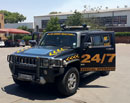
Geoff Schapiro, a director at 24/7 Security, introduced us to the company and its LPR capabilities by taking us for a drive in one of the company’s LPR-enabled vehicles. While it’s easy to focus only on the LPR technology, the systems 24/7 has in place enhance its overall capacity to provide the security services its clients require.
The LPR vehicle is equipped with two powerful cameras that are able to recognise licence plates at high speed. The company installs a computer in each car, with a touch sensitive screen that the driver and his partner can observe. The system is connected in real time to the control room at 24/7 as well as to law enforcement.
When the system spots a stolen or suspect car, the crew in the vehicle are alerted through an alarm and the police control room receives the information as well. Unfortunately, legislation does not permit a private security company to arrest the drivers of stolen vehicles, but they can keep an eye on the vehicle until the police arrive.
With a full computer and communications link into its vehicles, 24/7 Security is also able to include technology like dashboard cameras in their cars. This not only allows the company’s control room to view the guards in action, but also to initiate 2-way conversations when required. Moreover, technology is also used to monitor the vehicle’s performance, such as speed and the route it is on, providing additional information for training purposes.
And when it comes to training, 24/7 spares no expense in ensuring its security personnel are up to the task. From legislation to fitness to shooting skills, its officers are thoroughly trained, both on and offsite, with ongoing training over the course of their careers.
24/7 also has LPR systems mounted on poles at the entrances to the communities it serves. Once again, an alert is sent when a suspicious vehicle is detected and armed response units can keep an eye on the suspects. The benefit of this is that once the suspects know they are under scrutiny, they realise the game is up and they leave the area.
While, once again, the private security officers can’t arrest them, by keeping the criminals under watch, their plans are thwarted as they know security is seconds away – with the police on call. Schapiro says the communities the company serves have all experienced a reduction in crime once the LPR systems are in place.
A final tool in 24/7 Security’s arsenal is a mobile app that officers can enter a licence plate number into and retrieve relevant information on it in real time. The private security officers are limited as to what information they can access, but the appropriate authorities are able to access almost any information required to assist them.
Furthermore, with the LPR systems connected to the police control room, the private security operator acts as additional eyes on the ground, providing more intelligence to the police services, which benefits everyone.
GeoVision SA
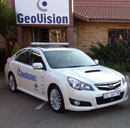
The second company is not active in patrolling, but in providing the technology that makes LPR work. GeoVision SA has provided a number of organisations in various verticals with LPR solutions. GeoVision’s Jacques Taylor says the company is involved in various community projects, through security service providers, to install LPR systems to protect the areas they live in. In these instances, most of the solutions are static, installed on poles or buildings within the area covered, however there are also in-vehicle LPR solutions available.
GeoVision has the product range to supply the full LPR solution, from cameras and recorders to communications and access to various databases through which they can identify the licence plates. In describing the product the company supplies for LPR, Taylor says GeoVision supplies cost-effective products that do not cost as much as some of the LPR systems out there, but are as effective, with a 95% and above success rate.
The company can offer analogue and IP solutions and set it up so that the recognition is done on a central server, or on the edge (within the camera). Edge processing has the benefit that it will continue working even if the communications link to the server is down, allowing the service provider to keep a record of the licence plates along with images of the vehicles and any events that occurred during the communications failure.
Taylor adds that one of the benefits GeoVision SA offers clients is that the company has an in-house team that can customise software according to the customer’s requirements, ensuring the solution is fit for purpose. This is in keeping with the company’s aim of delivering a complete solution and not simply a camera or recorder. This customisation extends to adapting the software to recognise licence plates in neighbouring countries.
When specifying a camera for an LPR project, the technology recommended depends on when it will be used. A shopping centre that mainly operates in daylight hours may not require IR illumination, but another customer may require the system to function effectively at any time and in any conditions. GeoVision cameras incorporate a specialised chipset that is designed to deliver the accuracy required for reading licence plates.
The systems are designed for low power consumption, which has allowed certain projects to include solar powered LPR solutions for static cameras. Taylor also says the system can be integrated to access control solutions that allow certain cars to enter a facility as they arrive, or they can link a licence number with a smartcard for two-factor authentication.
And as can be expected, the in-vehicle solution provided can also be equipped with a GIS system to allow control rooms to track vehicles as well as see what the situation is through dashboard cameras if required.
It’s clear that Johannesburg’s private sector has the technology and know-how to make LPR work as well as it does in Cape Town. However, what seems to be missing is the buy-in and commitment from the authorities and local government to support integrating the systems available into a cohesive whole. It’s true to say that the city can’t simply allow anyone to access sensitive data, but systems can be developed in which the authorities get extra eyes everywhere and private organisations benefit from making their public cameras available to the city. Let’s hope the public/private cooperation that’s working well in Cape Town can find its way north into all major centres in South Africa.
For more information, contact: 24/7 Security Services, +27 (0)11 444 2237, [email protected], www.24-7security.co.za. Geovision SA: +27 (0)12 664 0411, [email protected], www.geovisionsa.co.za






© Technews Publishing (Pty) Ltd. | All Rights Reserved.
 printer friendly version