


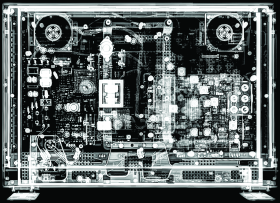
Walking through an airport, and increasingly other locations where security has been tightened, will provide anyone with the experience of having their bags scanned in an X-ray screening system. These systems were originally designed to increase security by allowing security operators to catch a glimpse of what is inside a bag, hopefully allowing them to find weapons, drugs or explosives.
Over time these systems improved and today do far more than simply provide a glimpse into what’s in the bag. In addition to scanning bags, customs operations can also apply the same technology to scan crates shipped by sea for suspicious substances, and there are devices that can scan cars for hidden contraband (hopefully without the driver).
Hans-Joachim Schöpe, senior programme manager for Smith’s Detection, spoke to Hi-Tech Security Solutions on a recent trip to South Africa. He explained that today’s X-ray screening solutions have been updated with auto-detection capabilities that will raise an alert if a weapon or explosives are detected, and in some instances, even being able to detect very small quantities of explosives and toxic materials. It accomplishes this through its 3D volumetric Computed Tomography (CT) scanning.
And, as with every industry in the world, X-ray systems are also being enhanced with artificial intelligence (AI), specifically deep learning. This will allow the systems to not only detect a knife or firearm in a bag, but also detect parts of a firearm and other contraband (see sidebar), preventing people from bringing weapons onto a plane or into a building in pieces. This will enhance the autonomous scanning capabilities of these solutions, but Schöpe adds that the human element in security and customs will remain as people will be needed to deal with alerts and also instances when the AI isn’t sure about something.
The good news for air travellers is that newer technology will allow them to scan their cabin baggage without having to first remove their laptops. In addition, you will also be able to leave liquids in the bag as well, with the system able to detect anything suspicious. Not only will this be more convenient, it will make the endless queues at security checkpoints move faster.
Integration with identity technologies
Unfortunately, speeding the screening process will not make the whole security process in airports that much faster as we would still have to check our identities when boarding and at passport control etc. This is where Schöpe says risk-based profiling will assist in processing the ever-growing number of travellers.
If security teams are able to accurately identify people in advance, through facial recognition for example, each individual’s risk profile can be determined and the level of scrutiny required for that person will be calculated based on the profile. A low risk individual will go through a lower level of security screening, while an unknown person or high-risk profile will mean tighter controls. Biometric identification is important in this respect in order to integrate information from multiple databases (such as a police database and the national identification system) to accurately determine the risk profile.
While many of these potential solutions are already being implemented in locations globally, Smith’s Detection is also active in South Africa, and has been for years, where it works through a distribution channel to take its products and services to market.
Weapon detection added to object recognition algorithms
Smith’s Detection has added weapon detection to its iCMORE family object recognition algorithms. iCMORE offers automatic detection of an ever expanding list of dangerous, prohibited and contraband goods.
iCMORE is designed to identify threats and help combat the movement of unsafe, undeclared or illegal goods. In doing so, it reduces the burden on image analysts and increases efficiency and detection accuracy, according to Matt Clark, VP technology & product development, Smiths Detection.
“The number of detectable items will continue to grow along with the range of systems offering the various algorithms. Following the introduction of lithium battery detection in 2018, weapon detection is the latest option to go live. We plan to expand the iCMORE family to include other contraband or dangerous goods.”
Offering automatic detection of handguns (pistols, revolvers), gun parts, flick and fixed-blade knives (min. length of about 6 cm), the weapons module was developed for use in a range of applications such as aviation passenger checkpoints, critical infrastructure protection, prisons and customs. The weapons kit is offered as an option on new systems or as an upgrade.
Deep learning is fundamental to artificial intelligence (AI) and Smith’s Detection took this approach in developing the weapons algorithm – collaborating with customers to build a huge library of images from which the algorithm could ‘learn’. However, conventional methodology may also be employed in future to create iCMORE modules for the detection of substances which do not present in consistent forms or shapes – such as drugs or currency.






© Technews Publishing (Pty) Ltd. | All Rights Reserved.
 printer friendly version