


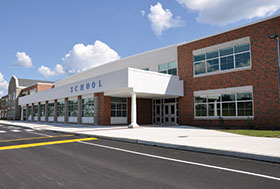
Maintaining an educational environment that is conducive to learning requires, at a minimum, that we keep our school children safe and secure. It’s easier said than done given the wide range of sizes and types of educational institutions.
High-profile violence in educational environments highlight the urgency of the need for security and safety systems, and the challenges extend beyond preventing the active shooter incidents that grab headlines. In the United States, 79% of public schools recorded that one or more incidents of violence, theft, or other crimes had taken place, amounting to 1.4 million crimes. That translates to a rate of 29 crimes per 1 000 students (see https://nces.ed.gov/fastfacts/display.asp?id=49).
Security is a 24-hour challenge. Protecting our schools involves deployment of a range of security and physical hardening tools. Reducing risk requires that access to school buildings be controlled, while also preserving an ‘open’ campus atmosphere that promotes a learning environment. Schools should be an inviting place for students and families, so technology solutions aimed at restricting access should be low-profile and unobtrusive. School security must also be designed in layers, or concentric circles of protection, starting at the school’s perimeter and working inward to secure individual classrooms and other internal areas.
How technology can help
Video surveillance is a technology that is unobtrusive and can promote security, beginning at the outermost boundaries of the school environment, at the perimeter and as automobiles drive onto school grounds. Surveillance can keep a silent and constant watch on people as they come and go.
Furthermore, incorporating new artificial intelligence (AI) and deep learning technologies are increasing the real-time capabilities of video surveillance to provide early warning of a possible security threat as it enters a campus. AI and deep learning analyse the content of video feeds and provide usable information to security personnel, including analysis of trends and real-time alarms when an event takes place.
In addition to controlling perimeter access, video surveillance incorporating AI can also provide other benefits, such as keeping watch on a school campus after hours – before and after school, or even on weekends when extra-curricular activities may be taking place. The systems can monitor traffic flow and ensure that only authorised vehicles enter an area. The benefits of AI-driven video systems also enable greater effectiveness of systems that are not being actively monitored. Video feeds are analysed in real-time and alarms can be raised only if there is a problem.
Controlling illegal parking
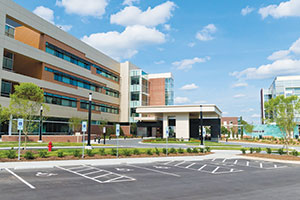
Whenever a vehicle passes into a restricted area on a school’s campus, the video system captures a vehicle image and automatically provides significant data.
Automated number plate recognition (ANPR) systems identify the licence numbers of cars that enter a school’s parking entrance or gate and can match the numbers to a watch list and raise an alarm.
The technology could also be used to monitor compliance with restricted areas; for example, to only allow vehicles that registered for a parking pass to park in a certain lot. A more advanced approach could involve dual identification technologies – vehicle plate and facial recognition of a driver – to add another layer of security.
Video systems with illegal parking detection can define a zone for no parking at a school. If any vehicle enters the area, the camera will be triggered to collect evidence. Images are captured of illegally parked vehicles, and the system provides data about when and where it occurred, the vehicle plate number and the parking violation.
Controlling restricted areas
Traffic cameras with deep learning technology can also identify and classify vehicles; in effect, to distinguish between small and large vehicles and even detect a vehicle’s make, model and colour. For instance, it is possible to differentiate between cars and buses in ‘buses only’ areas. Currently such cameras are more commonly deployed on public streets and highways, but the capability is there.
The system can also capture images and produce alarm data if a vehicle is driven in the wrong direction, such as into an exit-only lane or the wrong way on a roadway.
Facial recognition at school entrances
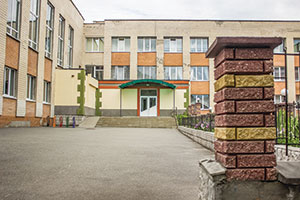
Facial recognition can be used at school entrances and gates to promote security of students and staff and to identify known suspects who attempt to enter the building. ‘Blacklist alarm’ technology generates a notification if a known suspect enters.
Clarity is paramount when identifying faces, and cameras that provide wide dynamic range (WDR) can offset challenges such as backlighting on a bright day when the light behind a person coming in is brighter than the ambient light inside.
Facial recognition systems can also be used inside school buildings. A facial recognition terminal installed at the entrance of a campus building or library can be configured to ensure that only registered students and staff have access to the buildings.
People counting cameras can be used in cafeterias and libraries to provide daily or monthly traffic reports and to better understand peak times and arrange workflow accordingly.
Unified solutions combine various applications
Feeds from all the cameras can be managed, monitored and stored in an authorised security centre, either located on a campus or in a central location that combines camera feeds from multiple campuses in a school district, for example. In general, security staff can access surveillance data in a variety of ways, via a desktop, laptop, or mobile device. Such flexibility makes the job of security personnel easier. A campus officer can view video on a mobile device while patrolling the campus.
Often video surveillance systems at schools are not monitored. School security personnel have more pressing duties than sitting in front of a video monitor and it is difficult for operators to stay alert for detailed incidents that may be shown on the screen. Tedious and error-prone manual monitoring can now be replaced by more intelligent systems that provide alarms only when there is something to see.
Systems to maximise school surveillance and security include dedicated, high-performance cameras for event capture, embedded network video recorder for event recording and storage, and a centralised video management platform to unify the system. AI and deep learning technologies automate security processes and provide useful real-time information that extends beyond video images. Deploying these technologies at the perimeter can promote better security campus-wide by preventing danger from entering the learning environment.
For more information contact Hikvision South Africa, +27 10 035 1172, [email protected], www.hikvision.com
| Tel: | +27 10 085 8300 |
| Email: | [email protected] |
| www: | www.hikvision.com/africa/ |
| Articles: | More information and articles about Hikvision South Africa |






© Technews Publishing (Pty) Ltd. | All Rights Reserved.
 printer friendly version