


MSA Africa officially re-launched the Alpha Personal Network in October 2013 at its Fire Media Day, an event dedicated to promoting safety equipment to the local fire fighting industry. MSA Africa respiratory products manager, Suraksha Mohun explains that the Alpha Personal Network begins with the SCBA pneumatic system and extends to personal monitoring and telemetry.
“Alpha technology encompasses a network of innovations that improve safety, efficiency and capability beyond classical SCBA systems. It is a system of modular and wireless components that can be individually integrated to enhance operational safety and capability as needed. A basic setup includes personal monitoring, pressure data and motion alarm,” she says.
The Alpha Personal Network monitoring and telemetry components include the alphaMITTER, alphaHUD, alphaSCOUT and alphaBASE software. Despite advanced technological sophistication, Mohun notes that the Alpha Personal Network system is robust and user-friendly.
“All components are ATEX approved for Zone 0 environments, which are classed as permanent risk areas that require a high level of protection, due to the fact that an explosive mix of elements are present over a prolonged period. The Alpha Personal Network is, therefore, designed to withstand the hostile environment that occurs in emergency fire rescue operations.”
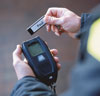
The alphaMITTER is a short-range transmitter attached to the SCBA, which sends air pressure data to the alphaSCOUT or alpha HUD units every second. The alphaSCOUT is a wireless device that functions as a pressure gauge, mini-computer and motion sensor and alarm combined.
After receiving pressure data from the alphaMITTER, the alphaSCOUT calculates remaining service time based on the user’s breathing rate. “Should the user be unable to move, an integrated sensor activates an emergency alarm. In combination with the alphaBASE, the alphaSCOUT can also receive an evacuation notice from incident command.”
Using a non-distracting LED display at the perimeter of the user’s field-of-vision, the alphaHUD display enables hands-free air supply monitoring. The wireless alphaHUD provides pressure status and alarm information, which greatly improves operational efficiency and safety.
Mohun believes that the alphaHUD is indispensible when used in combination with chemical protection suits, where the ability to use a hand-operated gauge is limited. “What’s more, the alphaHUD can also deliver an evacuation signal when used in conjunction with the alphaSCOUT and alphaBASE command communication option.”
The wireless USB 2,4 GHz signal exchange between alphaMITTER, alphaSCOUT and alphaHUD creates a defined network around the user. Although devices are easily interchangeable, when an alphaSCOUT or alphaHUD makes contact with an alphaMITTER, they establish a unique signal pairing that cannot be confused by other devices in the vicinity. “In order to ensure maximum safety, they can only be switched off when the system is fully depressurised,” adds Mohun.
Intuitive alphaBASE software allows for automatic monitoring without the need for operator intervention. An alarm signal alerts command officers of irregularities, while complete incident data is automatically logged and analysed, thereby replacing time-consuming manual reports.
Mohun says that the alphaBASE base station communicates with all active alphaSCOUT users to provide complete telemetric capability. All operative personnel are monitored to ensure that a rescue team can be sent in at the first signs of trouble. An evacuation signal can also be sent to specific teams or the entire crew.
The long-range Alpha Personal Network polls all logged-on alphaSCOUTs sequentially, and a complete polling cycle takes just 3,4 seconds. Up to 24 alphaSCOUTs can be logged onto a base station, while several transmitter and receiver systems can be operated simultaneously in close proximity to one another, which ultimately ensures maximum efficiency.
According to Mohun, the Alpha Personal Network boasts a state-of-the-art, long-range digital radio transmission. “With excellent receiver sensitivity and 500 mW of output power, the highly reliable signal has a range of up to 4 km. What’s more, an 866 MHz frequency provides a licence-free frequency that enables the base station to automatically pick a free channel.”
Looking to the future, Mohun is optimistic that the Alpha Personal Network will dramatically improve overall safety and proficiency in the local fire-fighting industry. “Fire fighters risk their own lives to save others, and their jobs are becoming increasingly complex. By incorporating Alpha technology into existing SCBA systems, I believe that fire fighters across Africa can significantly increase their effectiveness on the job,” she concludes.
For more information contact MSA Africa, +27 (0)11 610 2600, [email protected], www.msanet.com






© Technews Publishing (Pty) Ltd. | All Rights Reserved.
 printer friendly version