


As the infrastructure and service delivery in many of South Africa’s major cities decline, with a few, limited exceptions, more of the work that should be done by the state has fallen to private companies. Security is one of the major services where South Africans rely on private services to protect them due to the ‘limited’ policing available to citizens. Another is fire services.
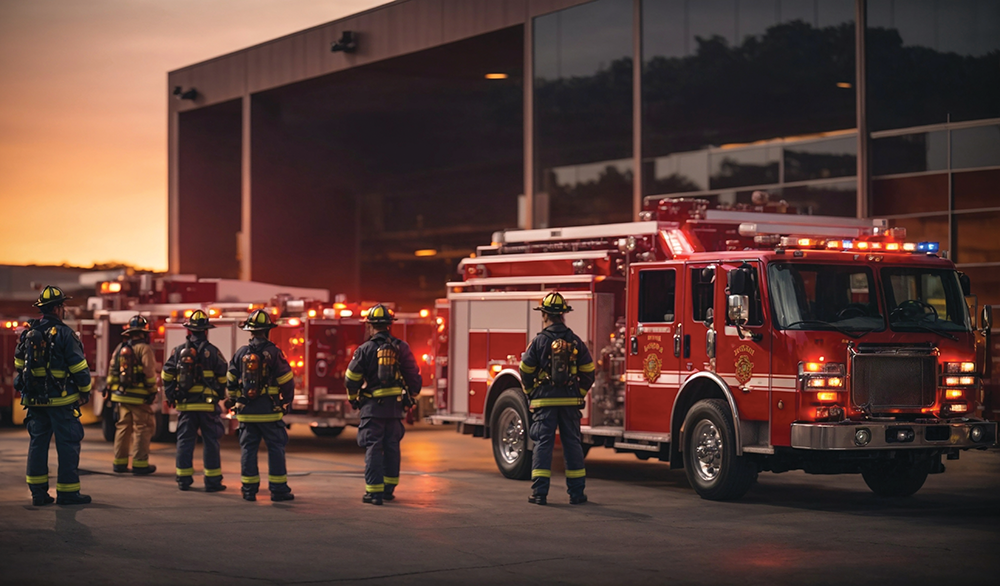
Far from being able to call the fire brigade when a building is on fire, with the expectation that they will arrive in due course with the equipment and capabilities to assist, people are now looking to private fire services that provide the latest firefighting technology from well-trained staff. Many large estates are increasingly responsible for handling more municipal services on their own, and fire safety appears to be a growing area of concern.
To find out more about private fire services, SMART Security Solutions spoke to Charnel Hattingh, head: group marketing & communications at Fidelity Services Group, about the company’s emergency fire service offering.
SMART: In recent years, some companies in South Africa have launched commercial fire emergency services, turning firefighting into a private venture. Why was this necessary, and why did Fidelity launch its service?
Hattingh: At Fidelity, one of our most important values has always been to listen to our customers and reduce their risk exposure. Over our 68-year history, we have seen a sharp increase in fire-related incidents across residential estates, commercial properties, and industrial sites. Municipal services, while essential, often face capacity constraints, long response times, and infrastructure challenges.
Our customers want certainty, a service that could respond within minutes, not hours, and integrate seamlessly with their security and medical needs. People want the same reliability for fire protection that they have come to expect from our security services. Fidelity SecureFire was established to fill this gap, not to replace municipal departments, but to provide contracted customers with guaranteed, professional fire protection that meets international standards and delivers peace of mind.
SMART: There have been some voices claiming private firefighting services are illegal. What is your opinion on this? If the local governments are unable to provide a service, what prevents private companies from doing so?
Hattingh: Before investing millions into Fidelity SecureFire, we commissioned senior counsel opinions and a full legal and compliance review. The conclusion was clear; no legislation in South Africa prohibits private firefighting services operating for contracted clients, provided all safety, labour, and environmental regulations are met.
Some municipalities have argued that private fire services are not adhering to the Fire Brigade Services Act (FBSA) of 1987 because we are not a ‘designated service’. It is important to clarify that the Act gives the option to apply as a designated fire service, not an obligation, nor does it restrict/prohibit private entities from offering professional fire response service.
Like private security companies working alongside the South African Police Service, private fire services operate under private law and within Section 22 of the South African Constitution, which guarantees the freedom to choose one’s trade, occupation, or profession.
In addition, the National Veld and Forest Fire Act explicitly allows landowners, estates, and communities to appoint an agent to manage, control, and extinguish fires on their behalf. Fidelity SecureFire fulfils this role, providing communities with a legal, proactive solution when municipal capacity is insufficient.
Our role is not to replace municipalities, but to complement and support them, ensuring lives, property, and communities are protected when every second counts.
SMART: What fire safety services does your company offer, and how do you go to market? In other words, is it offered on a ‘per use’ basis or as a subscription like armed response services? Which areas in South Africa do you cover, and do you collaborate with other companies in the security services market (or offer the service only as part of your overall service package)?
Hattingh: Fidelity SecureFire provides a complete, end-to-end fire solution:
• Fire response: A three-tier model with first, second, and third responders.
• Fire prevention: Risk assessments, suppression system installations, and equipment servicing.
• 24/7 monitoring: Thousands of sites nationwide through our Fire National Command Centre.
• Training: Onsite programmes to equip estate staff with early-stage fire management skills.
• Coverage: National footprint across all major metros and some secondary towns.
We have partnered not only with leading security firms, but also with leading insurer brands. Our delivery model is primarily subscription-based. It forms a very affordable fire protection package with your security package.
SMART: Firefighting is a specialised skill, as one cannot always just drown a fire in water (assuming the city is supplying it). What measures do you take to ensure you have the right equipment and appropriately trained personnel to handle large and complex fires where lives could be at stake?
Hattingh: Firefighting demands specialised skills, equipment, and planning. At Fidelity SecureFire, we have invested heavily to ensure we meet every challenge with speed and precision.
People: Our teams include senior officers and firefighters recruited from leading municipal departments, many with advanced qualifications and years of frontline experience. Their expertise ensures our operations meet the highest professional and safety standards.
Fleet: We operate a custom-built fleet designed specifically for South African conditions. This includes fire engines with greater water capacity, rapid intervention units for smaller or high-risk environments, medium pumpers for residential areas, and industrial-scale firefighting vehicles for complex, large-scale incidents. We also factor in weight and height restrictions common in residential estates – as well as traffic congestion challenges – ensuring the right vehicle can access narrow roads, gated estates, and high-density areas without delay.
Technology: We use eco-friendly polymer additives that double water efficiency and absorb heat far more effectively than standard water alone. This approach not only improves firefighting performance, but also reduces environmental impact, making every litre of water count.
Response model: Our tiered response model ensures the right resources are deployed for every incident. From Fidelity ADT rapid vehicles for immediate first response to full-scale pumpers and aerial units for major emergencies, we tailor our approach to the scale and complexity of each fire.
Together, these investments ensure we are ready for wildfires, residential fires, hazardous materials incidents, and industrial-scale emergencies, providing communities with reliable, professional fire protection when it matters most.
SMART: Do you offer additional fire-related services, such as fire audits and risk assessments, or consulting services for clients’ current fire safety equipment and installations? For residential estates, do you also offer training services to equip onsite staff with the skills to handle a fire emergency until help arrives?
Hattingh: Risk assessments and compliance consulting: We conduct comprehensive fire risk assessments aligned with all applicable legislation and standards, including the SANS Codes, SABS standards, the Occupational Health and Safety Act, the National Building Regulations and Building Standards Act, the Fire Brigade Services Act of 1987, and the National Veld and Forest Fire Act and ASIB. These assessments ensure estates and businesses meet both legal compliance and best practice standards for fire safety.
Hydrant testing and equipment maintenance: We provide regular hydrant testing, equipment maintenance, and system upgrades to ensure firefighting infrastructure remains fully operational and effective during emergencies. This proactive maintenance approach reduces risk, improves readiness, and meets regulatory requirements.
Training programmes for onsite staff: Our tailored training programmes equip estate and business staff with the knowledge and skills to handle early-stage fires safely until professional responders arrive. Training covers everything from basic firefighting techniques to evacuation procedures and compliance responsibilities.
By integrating legislation, prevention, and preparedness, our goal is to ensure communities become proactive rather than reactive in managing fire risk.
SMART: Despite the arguments about legality, do you work with municipal firefighting services in emergencies, or do you have to stand back if they arrive on the scene?
Hattingh: We follow Incident Command Systems (ICS) aligned with municipal firefighting protocols. When public fire services arrive, we integrate seamlessly. Similar to how private security integrates with the police on the scene. We adhere to our contract obligation to minimise risk to the best of our capabilities.
The goal on scene remains protecting lives, property, and communities, regardless of whether the response is public or private.
SMART: Despite some high-profile fires in recent years, fire safety in residential communities in South Africa is not seen as a priority. What advice would you give to estate managers and HOA members about why having a private fire service on call is important?
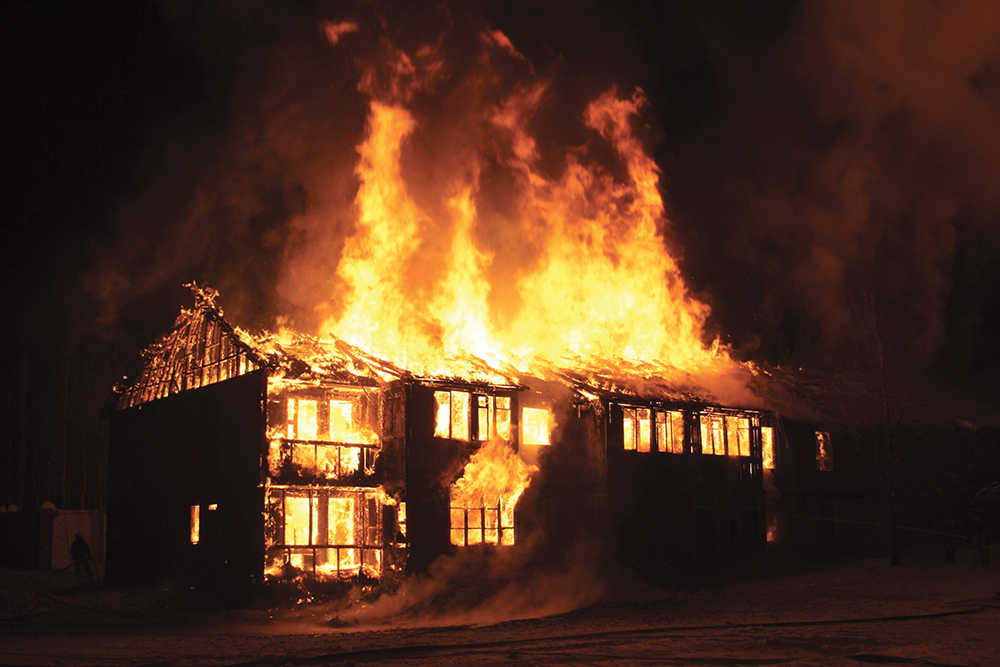
Hattingh: Fire risk in South Africa is real, growing, and often underestimated. Residential properties face increasing threats from veld fires and high-density housing, creating a perfect storm of vulnerability.
From a risk management perspective, fire is probably the most unpredictable threat you will ever face. It spreads without warning, evolves within minutes, and unlike other risks, fires do not negotiate.
Our advice to residential property managers is clear:
• Treat fire services as essential infrastructure, not a discretionary add-on.
• Make fire risk assessments, staff training, and rapid-response coverage a non-negotiable standard for your properties.
• Invest in improved communication and monitoring systems with residential properties to ensure early detection, faster alerts, and seamless coordination between onsite staff, residents, and professional firefighting teams.
Having dedicated private fire services in place means faster response times, reduced legal and insurance risks, and the highest level of safety for residents and property assets.
For more information contact Fidelity Services Group, [email protected], www.fidelity-services.com
| Tel: | +27 11 543 5800 |
| Email: | [email protected] |
| www: | www.technews.co.za |
| Articles: | More information and articles about Technews Publishing |
| Tel: | +27 11 543 5800 |
| Email: | [email protected] |
| www: | www.securitysa.com |
| Articles: | More information and articles about SMART Security Solutions |






© Technews Publishing (Pty) Ltd. | All Rights Reserved.
 printer friendly version