

Paying for experience, not assets

Issue 8 2021 Infrastructure, Security Services & Risk Management, Industrial (Industry)


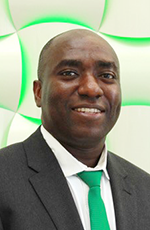
George Senzere.

Organisations today are increasingly demanding more value, improved operations and positive business results. One way to close this gap is to deliver ‘as-a-service’ programmes to meet the above with predictable, consistent and reliable outcomes.

Infrastructure as a Service (IaaS) has emerged as a feasible option that maintains crucial infrastructure such as IT, power consumption and business continuity while organisations focus on their core business.

In South Africa, we are seeing an increase in IaaS adoption with managed service providers delivering innovative, critical infrastructure services. And the benefits are numerous, particularly to those businesses that require consistent secure power and IT to operate at peak performance.

Why IaaS makes sense now

In the case of IT infrastructure, organisations often have to commit to considerable capex to not only acquire the technology, but also maintain it. These projects are frequently subject to long lead times (to acquire and install the assets) and then establish dedicated teams to maintain it.

Here, managed service providers can play a valuable role as they own the infrastructure and manage it on behalf of the organisation. This means the organisation not only saves on acquisition and installation time, but only pays for what it is uses, be it secure power, IT infrastructure or cooling or all the above.

Organisations are now freed to focus on their core business while the experts service and manage the infrastructure. This also enables businesses to predict their monthly expenditure and manage their operation costs accordingly.

The provision of secure power is another important IaaS benefit. Secure power provides critical protection to IT infrastructure and importantly, business continuity. It enables organisations to operate while mitigating the potential loss of business earnings.

At its core, secure power provides clean, continuous power and encompasses equipment such as uninterruptible power supplies (UPSs), standby generators, automatic voltage regulators and so forth.

When this infrastructure is then delivered to organisation on an IaaS basis, it is then called Secure Power as a Service (SPaaS).

Schneider Electric has seen SPaaS starting to enjoy some uptake, albeit on a smaller scale. Managed service providers are now starting to provide secure power to customers using, for example, a pool of single-phase UPSs installed on site. The organisation is then billed on a monthly basis for the usage of the SPaaS.

There is no doubt that the local marketplace is ready to, in earnest, start adopting SPaaS. The world is moving towards a consumption economy where it only pays for the experience and not for the assets that enable it.

Practically, IaaS and SPaaS address the following challenges:

• Existing assets may come to end of life which will require huge capex and time to modernise.

• IT and electrical loads are unpredictable and unfortunately organisations are oversizing equipment as opposed to running fit-for-purpose secure power solutions.

• Operating and maintenance costs are becoming increasingly unpredictable.

• Capital equipment requests impose huge demands on time from teams and detracts them from focusing on their core business.

• Asset tracking is also a challenge that requires sizeable teams and resources.

IaaS and SPaaS provide the tools to deliver predictable infrastructure costs. Ultimately, the efficiency of the business and the assets are maximised with agile provisioning that effectively manage business requirements and capacities.




Share this article:
Share via emailShare via LinkedInPrint this page


Further reading:

Global security in 2026
Editor's Choice News & Events Security Services & Risk Management Industrial (Industry) Mining (Industry)
The World Security Report 2026 states: “In a world of increasing volatility, physical security has evolved. It is no longer just a defensive measure; it is a critical driver of corporate value.”

Read more...
Who is to blame for autonomous mistakes?
Editor's Choice Security Services & Risk Management Industrial (Industry) Mining (Industry)
Most supply agreements for AI-integrated equipment still closely resemble plant hire contracts from ten years ago: bilateral, human-focused, and silent on who bears the risk when a machine makes a decision on its own.

Read more...
Industry perspective on industrial cybersecurity
Technews Publishing News & Events Infrastructure Industrial (Industry)
The Industrial Security Harmonization Group has released a joint industry perspective highlighting a critical truth in industrial cybersecurity: secure communication is not determined by protocols alone, but by how they are deployed and managed in real-world environments.

Read more...
Controlling access for people and vehicles
IDEMIA STid Security Technews Publishing Editor's Choice Access Control & Identity Management Asset Management Industrial (Industry) Mining (Industry)
When it comes to access control, the security requirements of mines and the industrial sector are similar, requiring a layered approach that combines physical barriers, digital authentication, and continuous monitoring to protect personnel, assets, and operational continuity.

Read more...
Five signs your storage is holding you back
Infrastructure Surveillance
In the drive for business growth, organisations across South Africa are investing heavily in talent, applications, and strategy. Yet the foundational technology that underpins every digital interaction - data storage - is often overlooked.

Read more...
957 women killed in three months
News & Events Security Services & Risk Management
Despite years of summits, task teams and public commitments, South Africa’s femicide rate remains around five times higher than the global average, and too few are using the legal lifelines available.

Read more...
Service robot technology for residential complexes
Suprema AI & Data Analytics Infrastructure Residential Estate (Industry)
Suprema has signed a three-party memorandum of understanding (MOU) with Hyundai Motor Group Robotics LAB and Hyundai Engineering & Construction (Hyundai E&C) to collaborate on advancing residential complexes through service robot technology.

Read more...
Africa’s opportunity to shape the future of human-centred AI
AI & Data Analytics Security Services & Risk Management
Across the Global South, countries are not yet locked into decades of legacy AI systems, energy-intensive infrastructure, or governance frameworks designed for a different technological era. That creates something rare in technology development: a cleaner slate.

Read more...
AURA appoints Taryn Winer as global head of people
News & Events Security Services & Risk Management
Following its €13,5 million Series B funding round last year and accelerating international expansion, particularly across the United States, AURA has appointed Taryn Winer as global head of people.

Read more...
Genetec launches Cloudlink 2210
Genetec Infrastructure Surveillance
New cloud-managed appliance addresses the practical challenges when adopting a cloud-managed model at scale, including storage costs, support for devices that do not enable direct-to-cloud connectivity, and the need to maintain local operation during connectivity disruptions

Read more...


While every effort has been made to ensure the accuracy of the information contained herein, the publisher and its agents cannot be held responsible for any errors contained, or any loss incurred as a result. Articles published do not necessarily reflect the views of the publishers. The editor reserves the right to alter or cut copy. Articles submitted are deemed to have been cleared for publication. Advertisements and company contact details are published as provided by the advertiser. Technews Publishing (Pty) Ltd cannot be held responsible for the accuracy or veracity of supplied material.


© Technews Publishing (Pty) Ltd. | All Rights Reserved.